
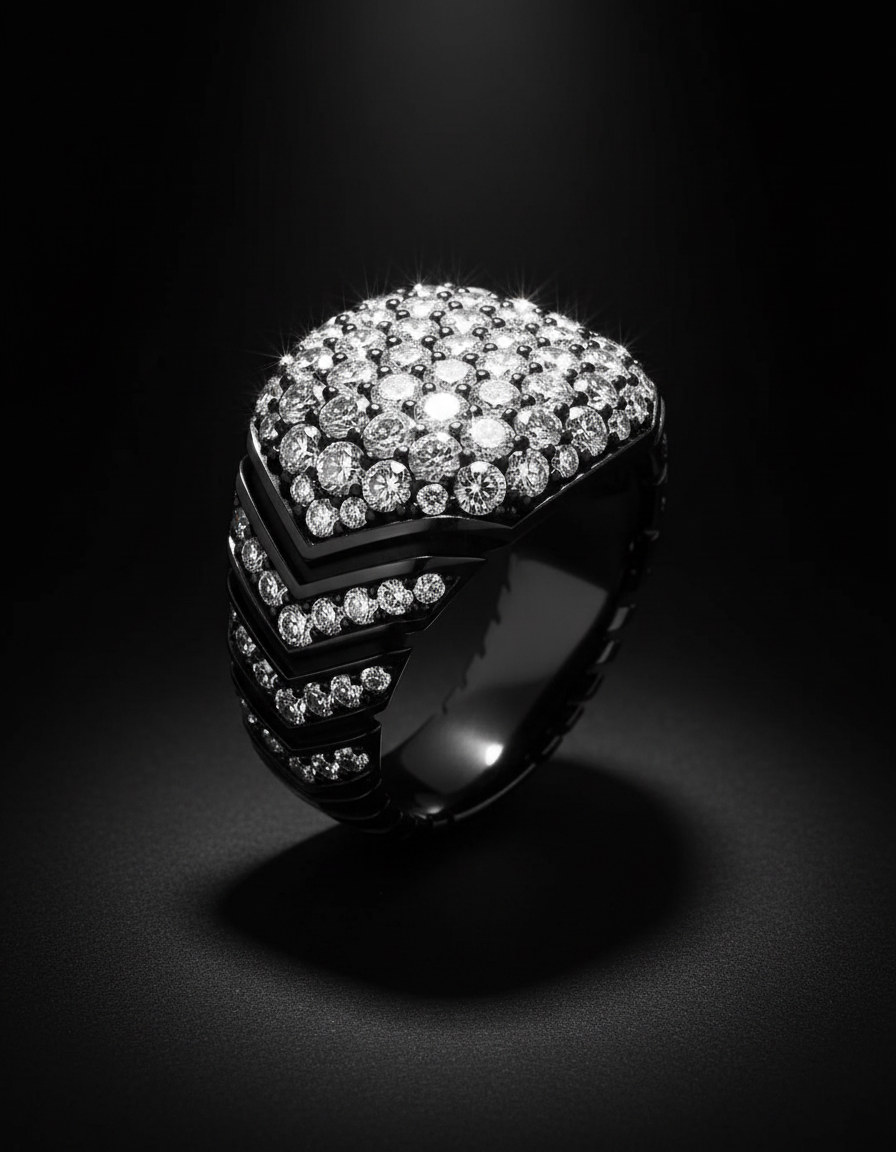
A diamond ring that looked bright in the shop can look grey within a fortnight of daily wear. The stone has not changed; it is coated. Diamonds attract oil, so skin oil, soap, sunscreen, hand cream and gym grime build up underneath the stone, where they block the light that makes it sparkle. Cleaning a diamond ring at home is simple, but what is safe depends on the metal and the type of diamond, and that is where most guides stop short.
How to clean a diamond ring at home: five steps
This method is safe for white diamonds, natural or lab-grown, set in gold, platinum or silver, and for black diamonds. It takes about 20 minutes, most of it waiting.
- Soak. Fill a small bowl with warm (not hot) water and add a few drops of mild dish soap. Soak the ring for 10 to 20 minutes to loosen grease.
- Brush. Use a soft toothbrush, a new one kept for jewellery. Brush gently behind and underneath each stone, around prongs and along the edges of channel or pavé settings, where grime collects.
- Rinse. Rinse in a second bowl of clean warm water. Do not rinse over an open drain.
- Dry. Pat dry with a lint-free cloth or microfibre, then let the ring air-dry fully before storing it.
- Check. Look at the stones under a lamp and gently tap the ring near your ear. A stone that moves or rattles needs a jeweller before you wear it again.
Lab-grown diamonds are the same material as natural diamonds, so they clean exactly the same way.
What should you not use on a diamond ring?
Avoid anything abrasive, anything strongly acidic or alkaline, and anything that vibrates the setting. Diamonds themselves are tough, but metal, settings and some stones are not.
- Toothpaste and baking soda scrubs: abrasive; they scratch gold and silver and pack residue into settings.
- Bleach and chlorine: can attack the other metals in gold alloys and damage silver.
- Acetone and harsh household cleaners: unnecessary, and hard on treated stones and glued parts.
- Hot water straight from the kettle on a cold ring: sudden temperature changes are best avoided.
- Home ultrasonic cleaners on pavé, fragile or treated stones: the vibration can loosen small stones, and GIA advises that ultrasonic, steam and acid cleaning can damage fracture-filled diamonds.
Myth check: vinegar and "the Dawn method"
Dish soap is fine; vinegar is unnecessary. The "Dawn method" that circulates online is simply warm water with a mild dish soap, and it is the standard jeweller's method. Any plain dish soap works the same way. Avoid soaps with bleach, lemon, moisturisers or scrubbing beads.
Vinegar is an acid. It will not hurt a diamond, but it can dull silver, strip the dark finish from oxidised designs and weaken glue or fillers. On a plain gold ring with untreated white diamonds it does little harm, but it offers nothing that soap does not. Leave it out of the routine.
Which methods are safe for which ring?
| Method | Safe for silver-set diamonds? | Safe for gold-set diamonds? |
|---|---|---|
| Warm water and mild dish soap | Yes | Yes |
| Soft toothbrush | Yes, gently | Yes |
| Silver polishing cloth | Yes, on open metal only | Not needed |
| Vinegar soak | No | Tolerable, unnecessary |
| Baking soda paste | No | No |
| Baking soda and foil bath | No | No |
| Silver dip | No | No |
| Toothpaste | No | No |
| Home ultrasonic cleaner | Not for black diamonds or pavé | Not for black diamonds or pavé |
| Professional clean and check | Yes | Yes |
How to clean a diamond ring set in silver
Clean a sterling silver diamond ring with soap, water and a soft brush, then polish only the bare silver with a silver cloth. The silver tarnishes and the diamonds collect grease, so the ring needs both treatments, applied carefully.
What to avoid is anything designed to strip tarnish chemically. Silver dips, baking soda and foil baths and silver pastes work on bare silver, but around stones they can etch the metal of the setting, remove intentional blackening that frames black diamonds, and leave residue under the stones. Our guide on how to clean silver jewellery at home explains which silver methods suit which pieces, and can diamonds be set in silver explains how silver holds stones.
How to clean a black diamond ring
Black diamonds need the gentlest version of the five steps: mild soap, warm water, soft brush, pat dry. No ultrasonic, no steam, no harsh chemicals, and no hard knocks.
The reason is structural. GIA's black diamond guide explains that most natural black diamonds get their colour from countless tiny inclusions, which can make them more brittle and prone to chipping if struck, and it advises against ultrasonic and steam cleaning. Many black diamonds on the market are also treated to deepen their colour. Unless you have been told in writing how a stone was treated, clean every black diamond as if it were fragile. For more on choosing one, see our guide to the black diamond ring for men.
Cleaning pavé and eternity bands
Pavé and eternity bands have many small stones in shallow settings, so they need the soak to do most of the work and the brush to do very little. Soak for the full 20 minutes, brush lightly along the rows rather than across them, and rinse well so no soap dries between stones. Check that every stone is still in place afterwards.
Men's bands take more knocks than most rings, from weights, steering wheels and door handles. If you notice a gap in a row of stones, stop wearing the ring until a jeweller has looked at it.
How AXIOM approaches this
Many of our men's rings and bands are 925 sterling silver set with natural black diamonds or lab-grown white diamonds, so we recommend soap, water and a soft brush at home and no dips or home ultrasonic cleaning. Every piece carries a lifetime craftsmanship guarantee with free servicing, so when a ring needs a deeper clean or a setting check, contact us. For a full routine across metals, see our men's jewellery care guide.
The practical takeaway
Warm water, a few drops of mild dish soap, a soft brush and a lint-free cloth are all a diamond ring needs at home. Brush behind the stones, where the grime actually is, keep acids, abrasives and home ultrasonic machines away from silver settings and black diamonds, and let a jeweller check the settings once a year.
