
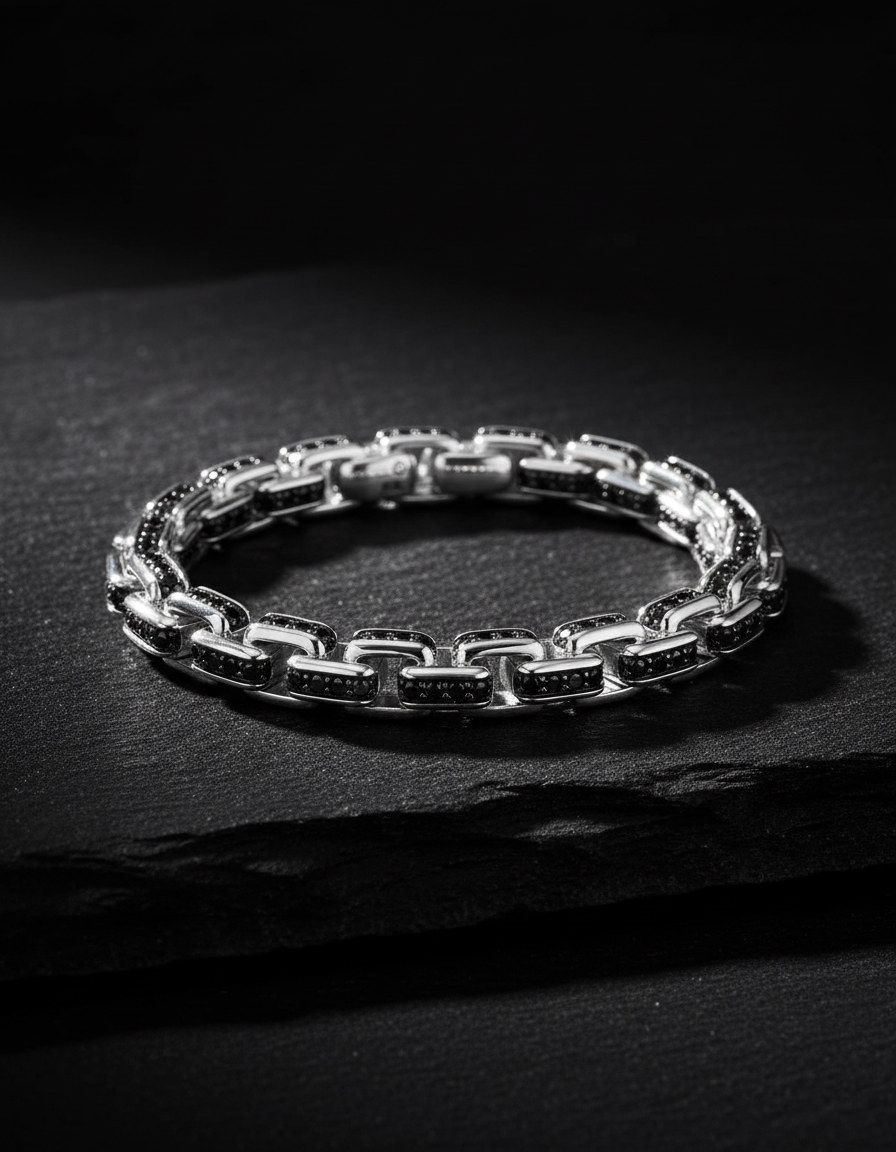
Here is how to clean silver jewellery at home: start with a silver polishing cloth in short straight strokes. Then fill a bowl with warm water and a few drops of mild dish soap, soak the piece for five to ten minutes, brush it gently with a soft toothbrush, rinse in clean water and dry it fully. If plain silver with no stones has turned black, lay it on aluminium foil in hot water with a spoon of baking soda for two to five minutes, then buff.
Silver that has gone dull or dark is not ruined, and in most cases it does not need anything stronger than a cloth and soapy water. The damage people do to silver at home usually comes from reaching for the strongest method first: a dip on a diamond ring, toothpaste on a mirror polish, a foil bath on a deliberately blackened design. This guide to how to clean silver jewellery at home works from gentlest to strongest and says plainly which pieces each method is safe for.
Before you start: identify what you are cleaning
The right method depends on the piece, not the tarnish. Check three things before you clean anything:
- Is it solid silver or plated? Look for a 925 stamp or a BIS SILVER hallmark. Plated pieces have a thin silver layer that aggressive cleaning wears through.
- Is it set with stones? Diamonds, and especially black diamonds and softer gemstones, change the rules.
- Is any darkening intentional? Many men's designs are oxidised in their recesses to show texture. Dips and foil baths remove it.
If the answer to any of the last two is yes, stay with methods 1 and 2 below.
Method 1: a silver polishing cloth
A silver polishing cloth is the safest and most useful cleaner for 925 silver. The treated inner layer lifts light tarnish, and the outer layer buffs to a shine. It is the right tool for rings, chains, bracelets and cufflinks between proper cleans.
- Hold the piece still on a flat surface.
- Rub the inner layer over the silver in short, straight strokes, not circles.
- Work around stones rather than over them.
- Buff with the outer layer.
Do not wash the cloth; the polishing compound washes out. Replace it when it is black all over.
Method 2: mild soap and warm water
A soap wash removes the sweat, oil and lotion that tarnish feeds on, and it is safe for almost every silver piece, including diamond-set ones. Use it every few weeks for anything worn daily.
- Fill a bowl with warm water and add a few drops of mild dish soap, one without lemon or bleach.
- Soak the piece for five to ten minutes.
- Brush gently with a soft toothbrush, getting behind stones, between links and into engraving.
- Rinse in clean water in a bowl, not over an open drain.
- Pat dry with a lint-free cloth, then leave it to air-dry fully before storing.
- Finish with a polishing cloth.
For a silver chain, work the soapy chain gently between your fingers rather than brushing hard, and roll it in a towel to dry. Our guide on how to clean a diamond ring at home uses the same method in more detail for stone-set rings.
Method 3: baking soda and aluminium foil bath
For plain silver with heavy black tarnish, a baking soda and foil bath is the most effective home method, and the least abrasive. It reverses tarnish chemically instead of scrubbing it off. Use it only on solid silver with no stones, no glued parts and no intentional blackening.
- Line a heat-proof glass or ceramic bowl with aluminium foil, shiny side up.
- Pour in hot water from the kettle and stir in baking soda; a tablespoon or two is plenty for a small bowl.
- Lay the silver on the foil so it touches it.
- Leave for two to five minutes; turn the piece so every side touches foil.
- Lift out with plastic tongs, rinse in clean water and dry.
- Buff with a polishing cloth, because the bath leaves a slightly matte surface.
Why aluminium foil cleans silver. The Canadian Conservation Institute explains that when silver touches aluminium in a warm alkaline solution, the aluminium corrodes and the reaction reduces the tarnish back to silver metal. The conservators' version uses washing soda (sodium carbonate); baking soda at home works on the same principle, more gently. Unlike a polish, this method returns the silver in the tarnish to the surface instead of rubbing it away.
When not to use it. Anything set with stones, because the bath can leave residue under settings and the heat and chemistry do not suit every stone or setting. Anything oxidised on purpose, because it removes the darkening. Anything plated or hollow, where solution can get trapped.
Method 4: commercial silver dips
Silver dips are fast but the harshest option. They are an acid combined with a complexing agent, and they work by dissolving tarnish faster than they dissolve the silver underneath. The Canadian Conservation Institute's guidance warns that leaving a piece submerged until every mark is gone leads to over-cleaning, that the acids damage other materials such as inlays and wood, and that dip which leaks into a hollow part is almost impossible to wash out.
If you use one at all, use it on plain solid silver only: dip for a few seconds, rinse thoroughly in running water and dry at once. Conservators recommend applying the liquid locally with a cotton swab rather than immersing the piece. Never use a dip on diamond-set, oxidised, hollow or plated jewellery.
Which cleaning method is safe for which piece?
| Method | Best for | Avoid on |
|---|---|---|
| Polishing cloth | Everyday upkeep of all solid silver | Nothing, but work around stones |
| Mild soap and warm water | Grime on all silver, including diamond-set | Pieces with glued parts (brush, do not soak) |
| Baking soda and foil bath | Heavy black tarnish on plain solid silver | Stone-set, oxidised, plated or hollow pieces |
| Commercial dip | Occasional deep clean of plain silver | Stone-set, oxidised, plated, hollow pieces |
| Silver polish paste | Scratched or dull plain surfaces | Settings, oxidised recesses, fine engraving |
| Jeweller's clean and polish | Stone-set pieces, badly tarnished or scratched items | Nothing |
Cleaning diamond-set silver
Diamond-set silver needs the gentle methods only: polishing cloth on the open metal, soap and water with a soft brush for the rest. Foil baths, dips and abrasive pastes can etch the silver around the stones, strip the dark finish many black-diamond designs rely on, and leave residue under settings that dulls the stones.
Black diamonds need extra care. GIA notes that natural black diamonds are full of tiny inclusions that can make them more brittle, and recommends mild soap and water rather than ultrasonic or steam cleaning. For more on how silver holds stones, see can diamonds be set in silver.
Myth check: toothpaste, ketchup, vinegar and ammonia
| Home remedy | Does it work? | The problem |
|---|---|---|
| Toothpaste | Removes tarnish by abrasion | Scratches polished silver; residue in crevices |
| Ketchup | Slowly, on light tarnish, because of its acids | Messy residue in links and settings; no better than soap |
| Vinegar soak | Partly | Acid can dull finishes and is unsuitable near stones and glue |
| Ammonia | Cuts grime | Dissolves copper from sterling silver, per conservation guidance |
| Lemon and salt | Partly | Salt scratches; acid and salt attack the surface |
The pattern is the same for each: anything that removes tarnish by abrasion also removes silver, and anything acidic works by attacking the surface. Neither is worth it when a cloth and soap do the job.
How AXIOM approaches this
Our silver pieces are solid 925 sterling silver rather than plated base metal, so a polishing cloth and soap wash will always bring them back to the same metal. Many are set with natural black or lab-grown white diamonds, so we recommend the gentle methods only and suggest leaving deep cleaning and refinishing to us: every piece carries a lifetime craftsmanship guarantee with free servicing and refinishing, described on our about page. If a piece needs attention, contact us.
The practical takeaway
Clean silver little and often with a cloth and soap, and it rarely needs anything stronger. Save the foil bath for plain silver that has gone properly black, keep dips away from anything with stones, and let a jeweller handle diamond-set pieces when they need more than a wash. To slow tarnish in the first place, read does sterling silver tarnish, and for a complete routine across metals see our men's jewellery care guide.
