
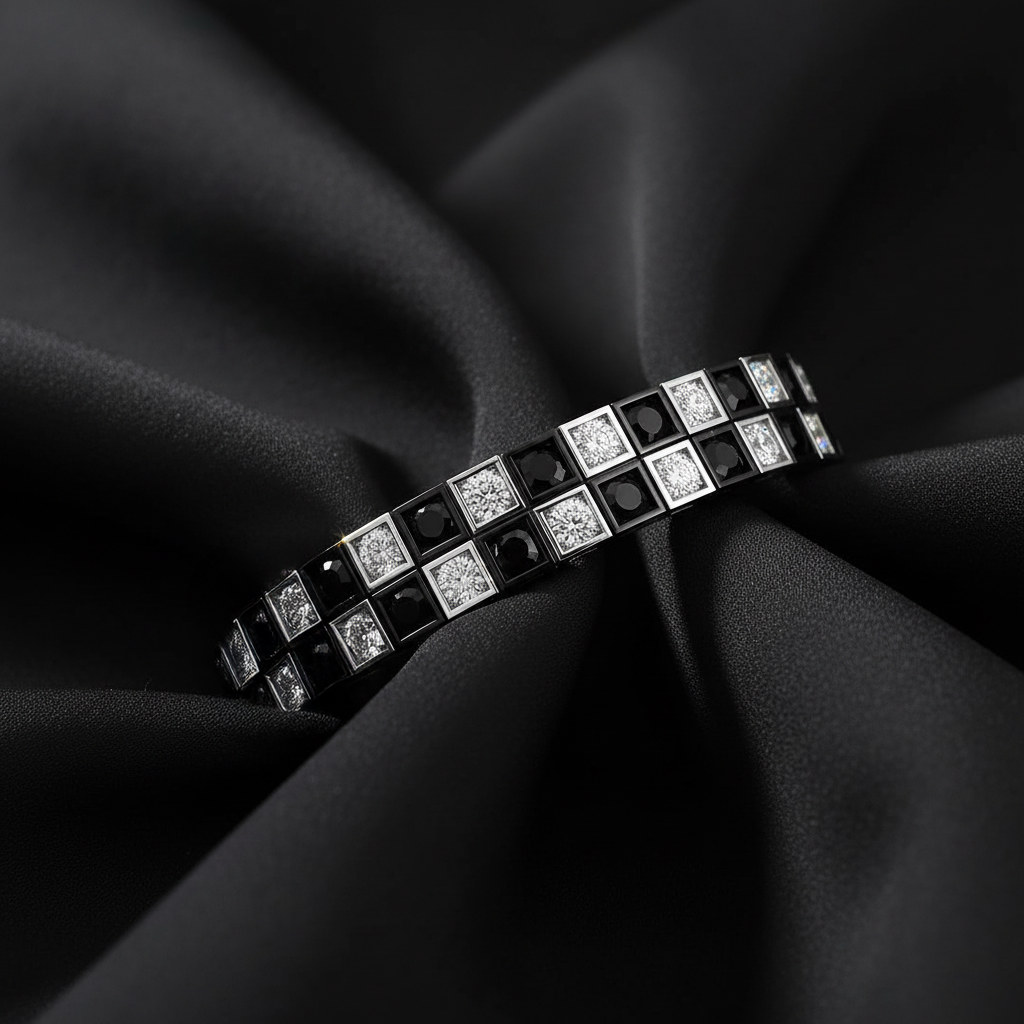
Men tend to wear jewellery harder than anyone else. A ring goes to the gym, a chain goes into the shower, a kada stays on for years and only comes off at airport security. That is how good jewellery should be worn, but it means a few habits matter more than any cleaning product. This guide covers them in the order they matter: what to take off and when, how to look after each material, how to store it, and what to have checked once a year. Detailed cleaning methods live in their own guides, linked below.
When should you take your jewellery off?
Take jewellery off for anything that involves impact, chemicals, chlorine or heavy sweat. Most damage to men's jewellery is not wear and tear but one bad afternoon: a ring against a dumbbell, a chain in a swimming pool, bleach on a diamond band.
| Activity | Take it off? | Why |
|---|---|---|
| Gym, weights, sport | Yes, rings and heavy chains | Scratches, bent bands, loosened stones, risk of a ring catching on equipment |
| Swimming pool | Yes | Chlorine attacks gold alloys and speeds silver tarnish |
| Sea | Yes | Salt water corrodes, and cold water shrinks fingers so rings slip off |
| Cooking and washing up | Yes, rings | Grease, food and detergent clog settings; sulphur in eggs tarnishes silver |
| Cleaning with chemicals | Yes | Bleach and household cleaners damage metal and some stones |
| Shower | Occasionally is fine | Soap film dulls metal and diamonds; dry pieces afterwards |
| Sleep | Chains and bracelets, yes | Kinks, snagged links and stressed clasps |
| Applying perfume, deodorant, lotion | Put jewellery on after | Chemicals and oils react with silver and film over stones |
The last row is the easiest habit to build. Dress, apply everything, let it dry, then put your jewellery on. For a metal-by-metal answer on water, see our guide on whether you can shower, swim or gym in your jewellery.
How to care for sterling silver jewellery
Sterling silver needs the most routine care of the common jewellery metals because it tarnishes. Sulphur in air and sweat forms a dark film of silver sulphide, faster in heat and humidity. The fix is little and often.
- Wipe each piece with a soft microfibre or silver polishing cloth after wearing.
- Keep it dry: pat it down after a shower or a sweaty day before putting it away.
- Store it airtight, one piece per zip pouch, with silica gel in the monsoon.
- Clean it properly every few weeks of regular wear, with warm water, a drop of mild dish soap and a soft brush.
Avoid silver dips on anything set with stones or deliberately darkened in its recesses, and never use toothpaste, which is abrasive. Our guide on how to clean silver jewellery at home takes you through each method and which pieces it suits. For why tarnish happens and how to slow it, read does sterling silver tarnish.
How to clean gold jewellery at home
Gold does not tarnish in normal wear, but it goes dull under soap film, skin oil and lotion. Cleaning it at home is simple and safe if you use nothing stronger than soap.
- Fill a small bowl with warm (not boiling) water and add a few drops of mild dish soap.
- Soak the piece for about ten minutes to loosen grime.
- Brush gently with a soft toothbrush, paying attention to the backs of settings, the links of chains and any engraving.
- Rinse in clean water. Close the sink drain first, or rinse in a bowl.
- Pat dry with a lint-free cloth, then buff with a dry microfibre cloth to bring back the shine.
This is also how to clean gold without damaging it. Leave out toothpaste, baking soda scrubs and scouring pads, all of which scratch; bleach and chlorine, which can attack the other metals in a gold alloy; and anything acidic on gold set with treated or porous stones. The National Association of Jewellers' care advice gives the same soak-and-soft-brush method and warns in particular to keep jewellery away from chlorine.
If a gold chain or ring has turned dark rather than dull, the cause is usually the other metals in the alloy reacting with sweat or chemicals, not the gold itself. Scratches that soap cannot shift need a jeweller's polish.
How to care for diamond jewellery
Diamonds are hard, but they attract grease, so a diamond ring loses its sparkle within days of normal wear. Warm soapy water and a soft brush behind the stone restore it. The settings, not the stones, are what need protecting.
White diamonds, natural or lab-grown
Clean them the same way as gold: warm water, mild soap, soft brush, rinse and pat dry. Brush from underneath, where lotion and soap collect and block light from entering the stone. Our guide on how to clean a diamond ring at home covers vinegar, dish soap and the other methods people ask about.
Ultrasonic cleaners are best left to a jeweller. They shift grime well, but the vibration can loosen stones in pavé, channel and micro-set pieces, and a jeweller checks the settings before and after. Avoid steam and ultrasonic cleaning entirely on any diamond known to be fracture-filled or coated.
Black diamonds
Clean black diamonds only with mild soap, warm water and a soft brush or cloth. GIA's black diamond guide explains that natural black diamonds usually owe their colour to countless tiny inclusions, which can make them more brittle than white diamonds, and advises skipping ultrasonic and steam cleaning. Avoid sharp knocks as well.
Diamonds set in silver
Treat the silver and the stones as one piece. Use soap, water and a soft brush. Do not use silver dips, baking soda and foil baths or abrasive silver pastes over the settings: they can etch metal around the stones, strip darkened finishes and leave residue under the diamonds. Polish only the open silver areas with a cloth.
How to store men's jewellery
Store every piece separately, dry and closed off from air. Diamonds scratch other diamonds and metal; chains tangle; silver tarnishes in open air.
- One piece, one pouch. Soft fabric pouches for gold; airtight zip or anti-tarnish pouches for silver.
- Fasten chains before storing. Close the clasp and lay the chain flat or hang it to prevent knots.
- Keep humidity down. A silica gel sachet in the box during the monsoon makes a visible difference to silver.
- Use anti-tarnish strips in closed boxes, and replace them every few months.
- Avoid rubber, wool and felt linings near silver, as these give off sulphur.
- Travel in a zipped case, not loose in a washbag, and never in checked luggage.
What should a yearly jewellery check cover?
Once a year, have your most-worn pieces checked by a jeweller. Small problems caught early cost almost nothing; a lost diamond or a snapped chain costs far more.
| What gets checked | What the jeweller looks for | Why it matters |
|---|---|---|
| Prongs and settings | Worn, bent or lifted prongs; stones that move | Prevents losing a stone |
| Clasps and jump rings | Weak springs, stretched rings, worn hooks | Prevents losing a chain or bracelet |
| Links | Stretched or thinned links | Chains usually break at a worn link |
| Ring shape and size | Out-of-round bands, a size that no longer fits | A loose ring slips off; a tight one can distort |
| Engraving and finishes | Worn lettering, patchy textures, faded blackening | Can be refreshed before it disappears |
| Kadas and cuffs | Opening width, shape, hairline cracks | Daily-worn pieces take the most stress |
Care at a glance, by material
| Material | Weekly care | Avoid | Professional service |
|---|---|---|---|
| 925 sterling silver | Wipe after wear; soap wash every few weeks | Chlorine, sweat left on, rubber, dips on set pieces | Polish and check about once a year |
| 18K gold | Soap soak and soft brush when dull | Chlorine, bleach, abrasives | Check settings and clasps once a year |
| 22K gold | Gentle soap wash | Knocks, abrasives, chlorine | Reshape and polish as needed |
| White diamonds | Soap and soft brush behind the stone | Lotion build-up, bleach, home ultrasonic on pavé | Setting check once a year |
| Black diamonds | Mild soap and soft brush only | Ultrasonic, steam, hard knocks | Setting check once a year |
How AXIOM approaches this
Our pieces are made in solid 925 sterling silver, with select 18K white gold options, solid metal rather than plated base metal, so they can be polished and refinished again and again. Every piece carries a lifetime craftsmanship guarantee that includes free servicing, resizing and refinishing; you can read about it on our about page or get in touch when a piece is due for a check.
The practical takeaway
Four habits do most of the work: take jewellery off for the gym, pool, kitchen and chemicals; put it on after perfume; wipe it before you put it away; and store each piece dry and separate. Add a soap-and-soft-brush clean when it looks dull and one professional check a year, and your jewellery will outlast the occasions you bought it for.
