
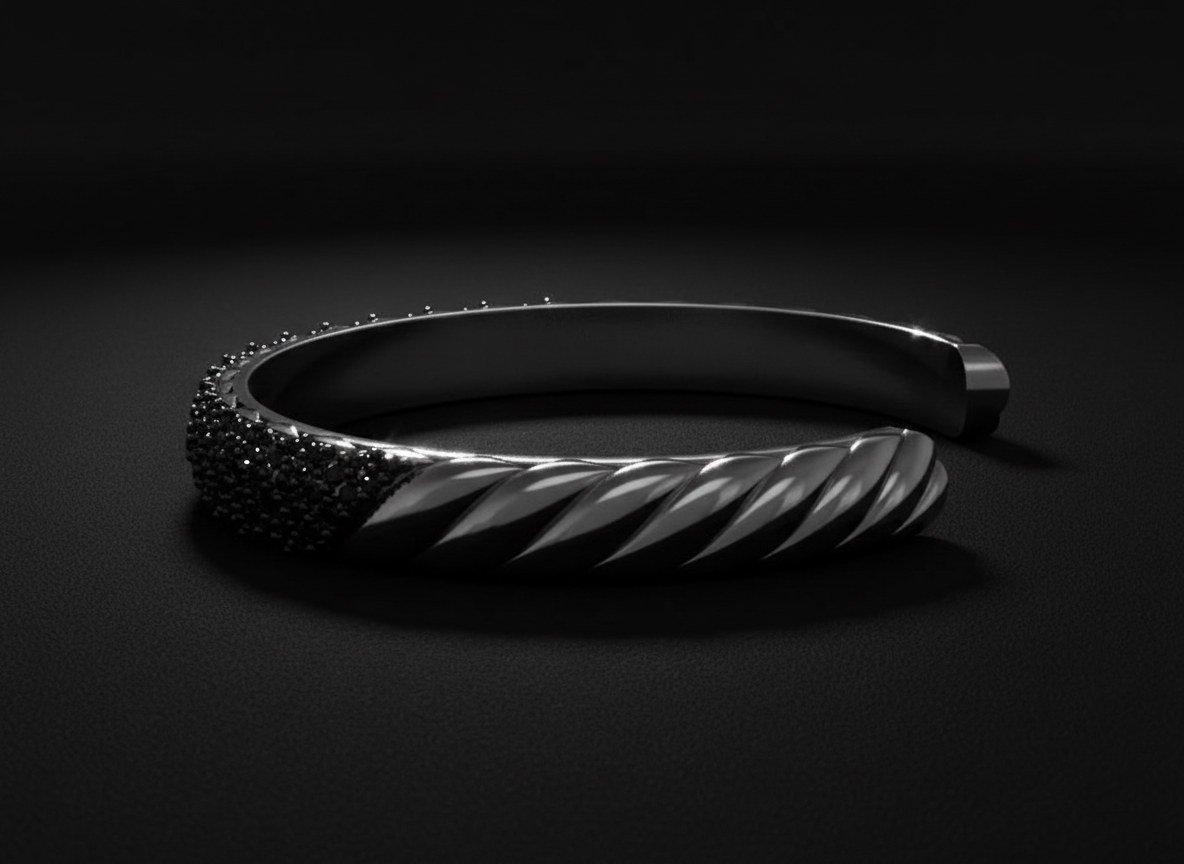
Men ask this more than almost any other care question, because the most-worn pieces, a chain, a wedding band, a kada, are the ones nobody wants to take off. The honest answer changes with the metal, the water and the activity. Solid gold barely notices a shower but hates a swimming pool; silver tolerates a quick rinse but not a sea swim; and no ring belongs on a hand gripping a barbell. This guide takes each in turn.
Can I shower with a gold chain? The metal-by-metal answer
You can shower with a solid gold chain occasionally without damage, but you should take it off for pools, the sea and the gym. How well it copes depends on the karat, because the other metals in the alloy are what react, and on whether it is solid or plated.
| Metal | Shower | Pool (chlorine) | Sea (salt water) | Gym |
|---|---|---|---|---|
| 22K gold (91.6%) | Fine occasionally | Take off | Take off | Take off |
| 18K gold (75%) | Fine occasionally | Take off | Take off | Take off |
| 14K gold (58.5%) | Occasionally, rinse after | Take off | Take off | Take off |
| Gold-plated | Avoid | Avoid | Avoid | Avoid |
| 925 sterling silver | Occasionally, dry at once | Take off | Take off | Take off |
| White diamonds (in any metal) | Fine, but soap dulls them | Take off | Take off | Take off rings |
| Black diamonds (in any metal) | Fine, gentle only | Take off | Take off | Take off rings |
"Fine occasionally" means water is not the problem. Soap film, heat and the friction of washing and towelling are. A daily shower is where wear comes from, not a single one.
Why showering dulls gold and diamonds
Showering does not harm solid gold, but soap, shampoo and body wash leave a thin film that makes gold look flat and diamonds look grey. Diamonds attract oil, so that film clings to the underside of the stone, where it blocks light. Hard water adds mineral spots.
The fix is easy: rinse in clean water after the shower, pat dry, and give the piece a proper soap-and-soft-brush clean when it looks dull. Our men's jewellery care guide has the full method for each metal. If a gold chain has turned dark rather than dull, our guide on why a gold chain turns black explains the causes.
Why chlorine and salt water are worse
Chlorine and salt are the real enemies, not water. Both attack the non-gold metals in a gold alloy and the silver and copper in sterling, so lower-karat gold and silver suffer most.
- Chlorine in pools and hot tubs reacts with alloy metals. With repeated exposure it can discolour gold and, over time, weaken lower-karat alloys; it darkens silver quickly.
- Salt water corrodes silver and base metals, and salt left drying inside chain links and under settings keeps working after you leave the beach.
- Sulphur-rich water from some hot springs blackens silver almost immediately.
For silver specifically, our guide on why sterling silver tarnishes explains the chemistry. There is a practical reason too: cold water makes fingers shrink, and rings slip off in the sea and in pools far more often than on land.
Should you take jewellery off at the gym?
Yes, take rings and heavy chains off before training. The gym is where most real damage to men's jewellery happens, and it is also where rings can injure you.
Three reasons, in order of seriousness:
- Ring avulsion. If a ring catches on a rack, a rope or the edge of a bar while your body weight is moving, the force goes into the finger. The Cleveland Clinic describes ring avulsion as a serious injury that frequently leads to amputation, notes that athletes who wear rings during sport are at higher risk, and advises taking rings off before working with tools or equipment and before anything that might pull on your fingers.
- Damage to the ring. Gripping bars and dumbbells bends bands out of round, scratches metal and can knock stones loose, especially in pavé and eternity bands.
- Chains and sweat. A chain swinging during lifts snags and snaps, and heavy sweat speeds up tarnish on silver and dulls gold.
If you want something on your finger while training, a silicone band is the usual choice, because it tears before it can injure you. For the ring you actually wear every day, see our men's wedding band guide, which covers metals and profiles that stand up to active lives.
Can you wear 925 sterling silver every day?
Yes, solid 925 silver can be worn every day, and regular wear with a wipe afterwards keeps it brighter than leaving it in a drawer. What it does not tolerate well is being left wet, sweaty or chlorinated. Wear it in daily life, take it off for swimming and the gym, dry it after a shower, and store it airtight at night.
Diamonds in the shower and pool
Diamonds themselves are not harmed by water, soap or chlorine. The settings and the sparkle are. Soap film dulls stones within days, chlorine and salt attack the metal holding them, and wet, soapy fingers are exactly when rings slip off and go down the drain.
Black diamonds deserve extra care. GIA notes that natural black diamonds contain countless tiny inclusions that can make them more brittle, so avoid knocks against tiles and taps, and clean them only with mild soap and water.
Kadas and religious pieces people never take off
Some pieces are not meant to come off. For many Sikhs, the kara is an article of faith worn continuously, and practice around it varies by family and community. Many Hindu men also wear a kada, a sacred thread or a pendant they do not remove. The right approach is not to ask anyone to take these off but to care for them where they are.
- Rinse after the pool or sea. A quick rinse in fresh water removes chlorine and salt.
- Dry the inside. Water and soap collect between the kada and the wrist; pat the inside dry after washing.
- Clean in place. A soft cloth and a little mild soap can clean a kada or pendant without removing it.
- Check the fit. A kada that has become tight, or a pendant cord that is fraying, is worth attention before it causes trouble.
Steel, silver and gold kadas all respond to the same basic care; silver simply needs more frequent wiping.
How AXIOM approaches this
Most AXIOM pieces are 925 sterling silver set with natural black diamonds or lab-grown white diamonds, so we advise taking them off before swimming and the gym and drying them after a shower. If a piece has been through the pool or the sea and needs attention, contact us.
The practical takeaway
The shower is rarely the problem; pools, the sea and the gym are. Keep solid gold and silver on for everyday life, take them off before chlorine, salt water and weights, and rinse and dry anything that gets wet. Plated chains are the exception: keep them out of water altogether.
