
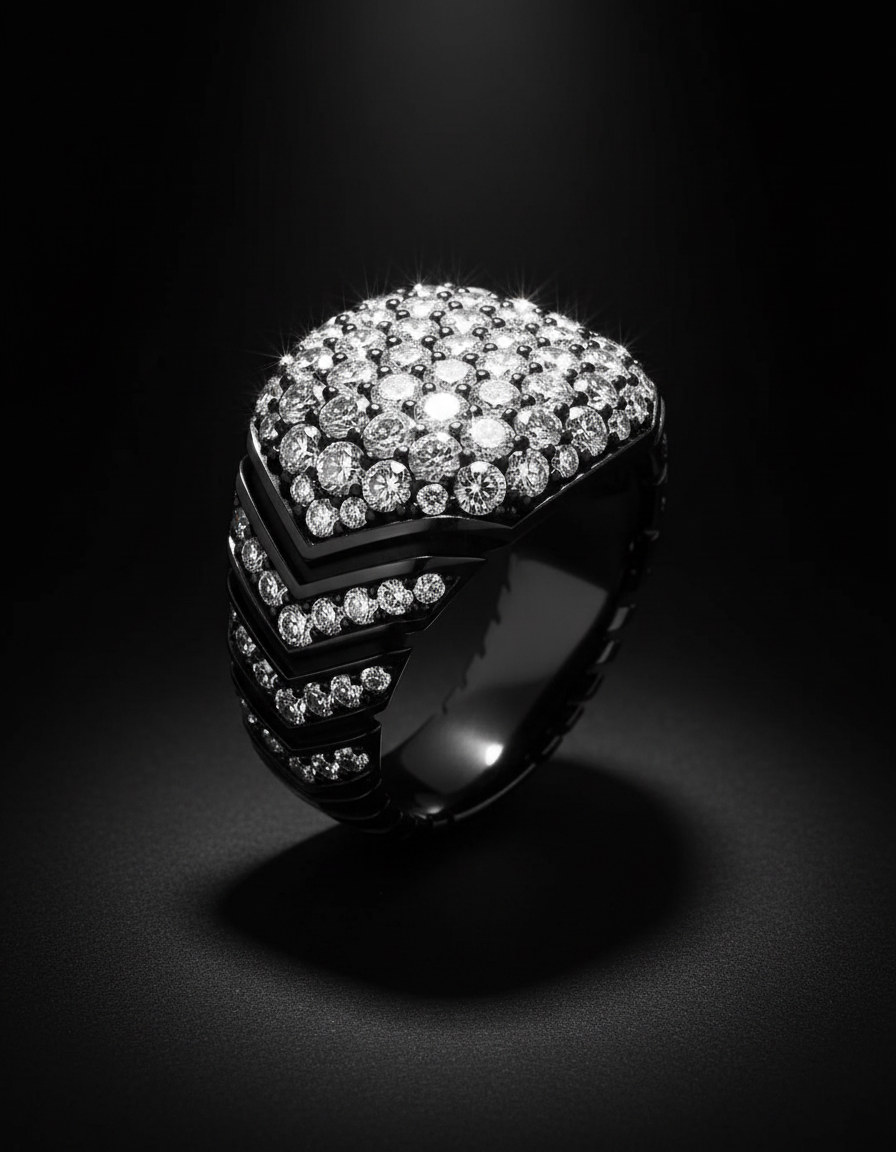
The resale value of a diamond in India is usually 80 to 90% of the stone's current value, plus the metal by weight, under the buyback policies that large jewellers publish. Nothing comes back for making charges, GST or the retailer's margin, so in the worked example below a ₹1,03,000 ring returns about ₹75,500, roughly 73% of the bill, and a sale to anyone other than the original jeweller usually returns less.
Most people only ask about resale once they want to sell, which is the worst time to learn the rules. The question matters earlier: at the counter, before you choose between a natural and a lab-grown stone, or between a brand with a published buyback policy and one without. This is an informational guide to how resale works in India, not investment advice.
What is the resale value of diamonds in India?
The resale value of a diamond in India is what a buyer will pay for the stone at today's trade price, plus the metal by weight, minus anything that cannot be resold. That is almost always less than you paid, sometimes by a wide margin. How much less depends on three things: the type of diamond, whether it is certified, and who is buying.
There are three places to sell.
- The original jeweller, under its buyback or exchange policy. Usually the best offer, because the terms are published and the jeweller already knows the stone.
- Another jeweller or a diamond dealer. Offers vary widely. The buyer has to grade the stone and price in the cost and risk of reselling it.
- A private buyer. Potentially the highest price, but slow, and it requires trust on both sides.
Why jewellers will not buy back at the same price
Because the retail price includes costs that disappear the moment you walk out: making charges, GST, design, and the retailer's margin. A buyer is purchasing a used diamond and some metal, not the experience of buying new jewellery.
Here is what happens to each part of a typical invoice at resale.
| Part of the price you paid | What happens at resale |
|---|---|
| Metal (gold, platinum, silver) | Paid by weight and purity at the day's rate, sometimes after a melting or refining deduction |
| Centre diamond | Revalued at today's price for its grade, then a percentage is applied |
| Small diamonds (pavé, melee) | Often valued low or not at all by outside buyers; brand policies may include them |
| Making and setting charges | Not recovered |
| GST (3% on finished jewellery) | Not recovered |
| Retail margin, design, brand | Not recovered |
The stone itself is also revalued, not refunded. If prices for that grade have fallen since you bought it, the buyback falls with them. If they have risen, you gain, but only on the stone's share of the price.
How brand buyback and exchange policies work
Several large Indian jewellers publish two different rates: a higher one if you exchange for new jewellery, and a lower one if you want cash. The percentages below are taken from each brand's own published policy at the time of writing. Policies change, so read the current version before relying on them.
| Brand (published policy) | Exchange | Cash buyback | Notable conditions |
|---|---|---|---|
| BlueStone | 100% of gold and diamond value at current rate; solitaires 90% | 100% of gold, 90% of diamond value; solitaires 80% | Making charges and a ₹500 return shipping charge deducted; original certificate required; solitaire terms apply up to ₹1 lakh |
| Candere (Kalyan) | 100% of gold and platinum, 90% of diamond jewellery, 80% of loose solitaires | 97% of gold, 95% of platinum, 80% of diamond jewellery and loose solitaires | Making charges and taxes excluded; buyback limited to invoices under ₹2 lakh |
| Limelight Diamonds (lab-grown) | 100% of selling price | 100% of the prevailing gold price plus 80% of the prevailing market price of the lab-grown diamond | Original certificate, invoice and warranty card required; ₹1,500 logistics fee deducted |
| Jewelbox (lab-grown) | 100% of gold and diamond value | 100% of gold plus 80% of diamond value | Making charges, taxes and a ₹1,000 processing charge deducted; buyback only on purchases up to ₹4,99,999 |
Three details in these policies matter more than the headline percentage.
- "Current value", not purchase price. Every percentage applies to what the stone is worth on the day you sell, by the brand's own price list.
- Making charges and taxes are excluded. A 90% buyback is 90% of the stone's value, not 90% of your bill.
- Paperwork. Original invoice and certificate are commonly required. Lose them and the offer may fall or disappear.
Natural vs lab-grown diamond resale value
Natural diamonds hold a resale market; lab-grown diamonds have very little resale value outside the brand that sold them. Both are real diamonds with the same chemistry. The difference is supply: lab-grown diamonds can be produced in growing quantities, and their prices have fallen steadily.
Industry analyst Edahn Golan reported that midstream prices for loose lab-grown diamonds fell another 14% in the first quarter of 2026, with one-carat rounds down 15% year on year, and India's polished lab-grown export prices down 13% on average (Edahn Golan Diamond Research). A buyback percentage applied to a falling market price shrinks every year.
| Natural diamond | Lab-grown diamond | |
|---|---|---|
| Who will buy it back | Original jeweller, other jewellers, dealers | Mainly the original brand, if it has a policy |
| Basis of the offer | Today's price for that grade | Today's lab-grown price, which has been falling |
| Effect of a grading report | Important; required by many policies | Required by brand policies; little outside value |
| Sensible way to think about it | Jewellery that keeps some value | Jewellery bought for how it looks |
None of this makes lab-grown a poor choice. It means the price you pay is for the piece you wear, not for money you can get back. Our guide to natural vs lab-grown diamonds compares them on everything else.
Do black diamonds have resale value?
Black diamonds usually have low resale value, and in most pieces the offer is driven by the metal. GIA notes that many black diamonds on the market are treated, typically lower-quality grey or heavily included diamonds heated or irradiated to an opaque black (GIA on black diamonds). Per carat, black diamonds sell far below colourless ones, and small black diamonds set in rows are rarely valued individually by a buyer.
Does a diamond gain value over time?
Not in any way you can count on. A natural diamond's price for its grade can rise or fall with the market, but the resale offer starts from a trade price, not the retail price you paid, so a stone has to appreciate a long way before a resale offer catches up with the original bill. Lab-grown prices have moved only downward in recent years.
That is why it helps to keep jewellery and investment in separate columns. A diamond piece can keep part of its value, and a well-documented natural stone keeps more than most, but the reason to buy it is to wear it.
What drives the resale offer for different pieces?
The more of the price that sits in metal and a single graded stone, the more of it comes back. Pieces whose value lies in design and many small stones return the least.
| Item | What mostly drives the resale offer |
|---|---|
| Certified natural solitaire, 0.5 ct and above | The stone's grade and today's price for it |
| Natural diamond band with small stones | Gold weight; small stones valued low by outside buyers |
| Lab-grown solitaire | Original brand's policy, if any; little outside market |
| Black diamond ring or bracelet | Mainly the metal weight |
| Silver jewellery with diamonds | Silver weight at the day's rate; stones valued low |
| Plain gold chain or kada | Gold weight and purity at the day's rate |
Silver deserves its own line. Sterling silver is worth far less per gram than gold, so a silver piece resells for roughly its metal weight, which is a small fraction of what a designed, stone-set piece costs. We explain what you are paying for instead in why 925 silver jewellery costs more.
An illustrative example
On a ₹1,03,000 natural diamond ring, a 90% buyback might return around ₹75,500 if prices have not moved. The figures are invented for illustration and do not describe any brand's pricing.
| Line | Purchase | Buyback (100% metal, 90% diamond, making excluded) |
|---|---|---|
| Gold at the day's rate | ₹35,000 | ₹35,000 |
| Diamond at list value | ₹45,000 | ₹40,500 |
| Making and margin | ₹20,000 | ₹0 |
| GST at 3% | ₹3,000 | ₹0 |
| Total | ₹1,03,000 | ₹75,500 |
If gold has risen since purchase, the metal line rises too. If diamond prices for that grade have fallen, the stone line falls. For how that stone value is built up in the first place, see diamond price per carat in India.
How to get the best resale value
Keep the paperwork, sell to the original jeweller first, and get at least two written offers.
- Keep the original invoice, the grading certificate and any warranty card together, safely.
- Read the seller's buyback and exchange policy before you buy, not after.
- When you sell, ask for the offer split into metal weight and purity, stone value, and deductions.
- Get a second offer from another established jeweller for comparison.
- Consider exchange if you intend to buy again, since exchange rates are usually higher.
- Insure the piece while you own it; resale value is irrelevant if it is lost. See jewellery insurance in India.
How AXIOM approaches this
AXIOM does not offer a buyback, exchange or trade-in programme. We make men's pieces at the Bharat Diamond Bourse, mostly in 925 sterling silver with natural black or lab-grown white diamonds, to be worn for years, and every piece carries a lifetime craftsmanship guarantee, with free servicing, resizing and refinishing. Our about page explains what we do offer, and you can ask us about any piece.
The practical takeaway: buy a diamond for the piece you will wear. If getting money back matters to you, choose a certified natural stone from a jeweller whose buyback policy you have read, and keep every document.
