
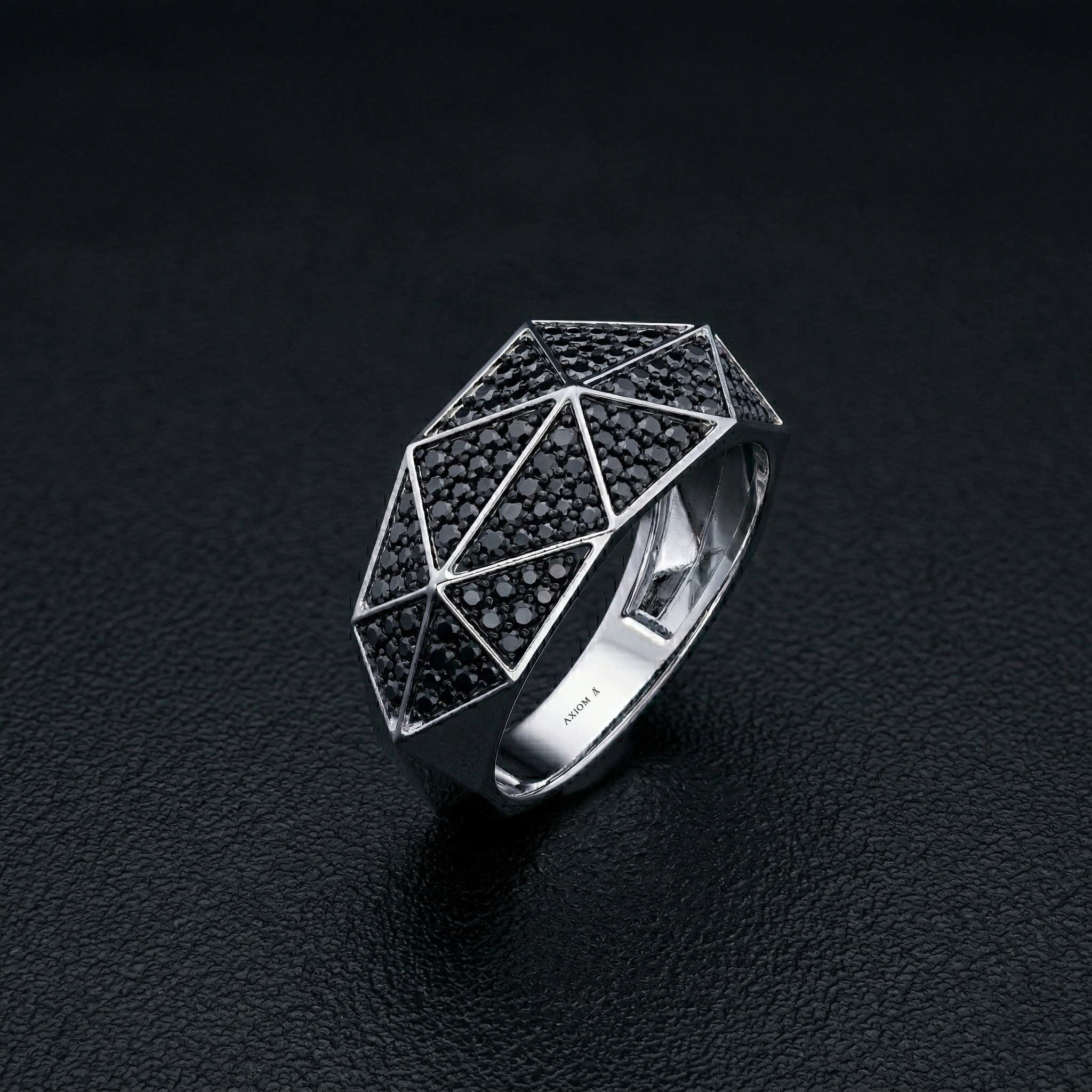
Tax on jewellery is small next to the price of the metal and stones, but it is the line on the invoice people understand least. It also varies more than it should between shops, because much of what is written online still repeats a 2017 reading of the rules. This guide works from the rate notification itself, so you can check any bill in two minutes.
What is the GST rate on jewellery in India?
Finished jewellery is taxed at 3% of its total selling price. That covers articles of jewellery of precious metal (gold, silver, platinum) whether plain or set with stones, and the rate is listed under heading 7113 in Schedule IV of the GST rate notification that took effect on 22 September 2025. You can read the rate schedule in CBIC Notification No. 9/2025-Integrated Tax (Rate).
The same 3% applies to imitation jewellery (heading 7117), gold and silver in bar or unwrought form, and coins. The September 2025 rate changes that moved many everyday goods did not change the jewellery rate.
| What you are buying | HSN heading | GST rate | Note |
|---|---|---|---|
| Gold, silver or platinum jewellery, plain or studded | 7113 | 3% | On the full price, making included |
| Imitation or fashion jewellery | 7117 | 3% | Same rate as fine jewellery |
| Gold or silver bars and unwrought metal | 7108, 7106 | 3% | Includes investment bars |
| Coins | 7118 | 3% | Gold and silver coins |
| Loose cut and polished diamonds (natural) | 7102 | 1.5% | Sold on their own, not set |
| Loose cut and polished lab-grown diamonds | 7104 | 1.5% | Same as natural |
| Rough or simply sawn diamonds | 7102 | 0.25% | Mainly a trade purchase |
| Loose coloured gemstones (not diamonds) | 7103 | 0.25% | Worked or unworked |
| Loose natural or cultured pearls | 7101 | 3% | Not strung or set |
How does GST appear on a jewellery invoice?
It appears as 1.5% CGST plus 1.5% SGST when the shop and the delivery address are in the same state, and as 3% IGST when they are in different states. The total is 3% either way. Online orders shipped across a state border are the most common case for IGST.
A proper tax invoice names the seller's legal entity and GSTIN, gives the HSN code, and shows the taxable value and each tax line separately. If you are buying something valuable, those details matter more than the headline price, and they are part of what makes an online purchase safe to make (our guide on whether it is safe to buy jewellery online covers the rest of that checklist).
Is GST on making charges 3% or 5%?
When a jeweller sells you a finished piece, the making charge is generally treated as part of the price of that jewellery and taxed at 3% with everything else. The rate notification has no separate goods entry for making charges. The jewellery is the main thing being supplied, and under GST's composite-supply principle the labour to make it follows the rate of that main supply.
The widely repeated "3% on gold, 5% on making" formula does not appear as a goods rate in the notification, and published guides disagree about it, sometimes within the same page. If your invoice taxes making at a different rate from the metal, it is fair to ask the jeweller which entry they are applying.
A different rule applies when labour is supplied on its own. If you hand a goldsmith your own gold and pay only for the work, or pay for a repair, that is a service with its own classification and rate, and the rate depends on the type of work. Ask for the SAC code and rate to be printed on the bill. For how making charges themselves are calculated, see gold making charges explained.
A worked example: GST on a diamond ring
On a ₹50,000 ring, GST at 3% is ₹1,500, making the total ₹51,500. The figures below are illustrative, not the price of any real piece.
| Invoice line | Amount | GST treatment |
|---|---|---|
| Gold (18K) | ₹28,000 | Part of taxable value |
| Diamonds | ₹14,000 | Part of taxable value |
| Making and setting | ₹8,000 | Part of taxable value |
| Taxable value | ₹50,000 | |
| CGST 1.5% | ₹750 | Same-state sale |
| SGST 1.5% | ₹750 | Same-state sale |
| Total payable | ₹51,500 |
If the same ring were shipped to another state, the two lines would be replaced by a single IGST line of ₹1,500. If a seller instead applied 3% to the metal and stones and 5% to the making, the tax would be ₹1,260 plus ₹400, a total of ₹1,660. The gap is small on one piece, but it tells you how the seller reads the rules.
Notice that the diamonds are taxed at 3% here, not 1.5%. The 1.5% rate is for loose stones only. Once a diamond is set, the finished piece is jewellery under heading 7113.
GST on silver jewellery
Silver jewellery attracts the same 3% GST as gold jewellery, on its full selling price. Purity does not change the rate: 925 sterling and 999 fine silver are both precious-metal jewellery. Silver-plated base metal is different: it is usually classed as imitation jewellery under heading 7117, which is also 3%.
Because GST is a percentage of the price, not the weight, it scales with everything that goes into a silver piece: stones, design work and hand-finishing. That is also why a designed silver piece costs more than its weight in silver, which we explain in why 925 silver jewellery costs more than the silver price.
GST on diamond and lab-grown diamond jewellery
Diamond jewellery, natural or lab-grown, is taxed at 3% on the whole piece. The stone's origin does not change the rate once it is set in precious metal.
Loose stones are where the rates split. Cut and polished natural diamonds and cut and polished lab-grown diamonds both attract 1.5%. Rough diamonds, and rough lab-grown crystals, attract 0.25%. Coloured gemstones such as sapphires and emeralds sold loose attract 0.25% whether they are cut or not. Most buyers will only meet the 1.5% rate if they buy a loose solitaire to have it set separately.
How does GST work on old gold exchange?
No GST is added when an individual sells his own old jewellery to a jeweller, because a private person selling personal belongings is not a registered supplier. GST applies to the new piece you buy, at 3%.
What varies is the arithmetic. Some bills calculate tax on the full price of the new piece and then deduct the old gold's value; others present the transaction differently. Ask for the new piece's taxable value, the tax, and the old gold's weight, purity and value to be shown as separate lines so you can check each one.
A related rule covers second-hand jewellery sold on in the same form. Where a registered dealer buys used jewellery from individuals and resells it without changing its form, a Karnataka advance ruling held that GST can be paid on the dealer's margin rather than the full price (Aadhya Gold Private Limited, KAR/ADRG/35/2021). Advance rulings bind only the applicant, so treat this as an example of how the margin rule has been read, not a general guarantee.
What to check on your jewellery bill
Four checks catch almost every GST error on a jewellery invoice.
- The seller's GSTIN and legal name are printed, and the invoice is titled as a tax invoice.
- The HSN code for finished jewellery is 7113, and the total tax is 3% of the taxable value.
- Tax is split into CGST and SGST for a same-state sale, or shown as IGST for an inter-state order, never both.
- If making charges are taxed at a different rate from the metal, ask which entry is being used and keep the answer in writing.
This is general information about published rates, not tax advice. If you are buying for a business, for example corporate gifts for men, an accountant can tell you whether input tax credit applies to your purchase.
How AXIOM handles this
For questions about a specific AXIOM order, from delivery to invoicing, contact us, and you can browse every piece in the collection with its price shown on the product page.
The practical takeaway: for finished jewellery, expect one rate, 3%, on one number, the full price. Anything more complicated on the bill deserves a question before you pay.
