
Silver feels like the simple metal to buy: check the rate, weigh the piece, done. Then the bill arrives with a making charge, sometimes a wastage line, a stone line and GST, and two shops quote very different totals for kadas that look identical. This guide breaks a silver jewellery price into its parts, shows the three ways making charges are quoted with the same worked example, and explains where silver pricing differs from gold.
How is silver jewellery priced in India?
A silver jewellery price is built from six lines: silver value, making charge, stones, hallmarking, any other charges, and GST at 3% on the total. Plain silver pieces are usually billed this way, line by line. Designer and diamond-set pieces are usually sold at one fixed price that bundles the same costs.
| Bill line | How it is calculated | What to check |
|---|---|---|
| Silver value | Net weight × fine silver rate × purity | Net weight excludes stones; purity is 0.925 for sterling |
| Making charge | Per gram, a percentage of silver value, or a flat amount per piece | Convert to rupees to compare |
| Wastage, if listed | A percentage of weight billed at the silver rate | Treat it as part of the making charge |
| Stone charges | Per stone or per carat, by stone type | Natural, lab-grown or simulant, in writing |
| Hallmarking | A per-article fee if the piece is BIS hallmarked | Silver hallmarking is voluntary |
| GST | 3% of the total of all lines above | Shown as CGST and SGST, or IGST |
The silver jewellery price calculator formula
Price = (net weight × fine silver rate × purity) + making + stones + hallmarking, then × 1.03 for GST. That is the whole calculator, and you can run it on a phone in the shop.
The purity factor is the step most explainers skip. Daily silver rates are quoted for fine silver, 999. Sterling silver, marked 925, is 92.5% silver, so its metal value is the fine rate multiplied by 0.925. Under India's silver hallmarking standard, IS 2112:2025, sterling is one of seven purity grades (800, 835, 925, 958, 970, 990 and 999), as the Press Information Bureau release on silver hallmarking sets out.
| Silver grade | Purity factor | Metal value of 10 g at a placeholder ₹250 per gram |
|---|---|---|
| 999 fine | 0.999 | ₹2,497.50 |
| 990 | 0.990 | ₹2,475 |
| 925 sterling | 0.925 | ₹2,312.50 |
| 800 | 0.800 | ₹2,000 |
The ₹250 per gram figure throughout this article is a placeholder chosen to make the arithmetic easy. It is not today's rate and should not be read as one. For the day's rate, use the benchmark published by the India Bullion and Jewellers Association, which lists 999 silver per kilogram with morning and evening fixes; divide by 1,000 for the per gram figure, and ask your jeweller which day and which fix their bill uses.
Per gram, percentage or per piece: the three ways making charges are quoted
The same kada can carry three different making charge labels, and only the rupee figure tells you which is cheaper. Here is one piece priced all three ways.
Assume a plain 925 sterling silver kada with a net weight of 30 g, a placeholder fine silver rate of ₹250 per gram, and a BIS hallmark.
- Silver value: 30 g × ₹250 × 0.925 = ₹6,937.50.
- Making charge: see the three methods in the table.
- Hallmarking: ₹35, the per-article fee a jeweller pays a hallmarking centre for silver.
- GST at 3% on the subtotal.
| Method | Making charge | Subtotal | GST at 3% | Total |
|---|---|---|---|---|
| ₹40 per gram | ₹1,200 | ₹8,172.50 | ₹245.18 | ₹8,417.68 |
| 15% of silver value | ₹1,040.63 | ₹8,013.13 | ₹240.39 | ₹8,253.52 |
| Flat ₹1,500 per piece | ₹1,500 | ₹8,472.50 | ₹254.18 | ₹8,726.68 |
The making charge rates in the table are illustrative, not typical or recommended. There is no standard silver making charge in India: each jeweller sets it by design, finish and overheads, and the same label (per gram, a percentage, per piece) hides very different rupee figures from one shop to the next. Per gram and percentage quotes favour light pieces; a flat per piece charge can favour heavy plain pieces. For the same method applied to gold, with wastage explained in detail, see gold making charges explained.
What else appears on a silver jewellery bill?
Stone charges, wastage and hallmarking are the three lines that change most between quotes.
Wastage. Some jewellers add a wastage percentage for metal lost in filing and polishing, billed at the silver rate. On a bill, it works as a second making charge. Add the two together before comparing quotes.
Stones. Stones are charged separately from silver and can cost far more than the metal. A quote should say whether they are natural diamonds, lab-grown diamonds, coloured gemstones or simulants such as cubic zirconia, and how many there are. Stone weight should be excluded from the silver weight: one carat is 0.2 g, so the difference is small in silver, but the stone type changes the price enormously.
Hallmarking. Hallmarking adds very little. Under the BIS Hallmarking Amendment Regulations, 2026, the fee a jeweller pays a hallmarking centre is ₹35 per silver article, with a minimum of ₹150 per consignment, plus taxes. The fee is per article, not per gram, so it is the same for a 5 g ring and a 60 g kada. Silver hallmarking is voluntary, so many silver pieces carry no hallmark line at all; our guide to the silver hallmark and 925 stamp explains what a genuine mark looks like.
Is GST on silver making charges 3% or 5%?
When you buy a finished silver piece from a jeweller, GST is 3% on the whole bill, making charge included. Articles of jewellery of precious metal, plain or set with stones, fall under heading 7113, Schedule IV at 3%, in the GST rate notification of 17 September 2025, and the making charge is part of the price of that jewellery.
Some silver rate pages state that making charges carry 5% GST. The goods notification has no separate entry for making charges, so a different rate can only come from labour billed as a separate service, such as paying a silversmith to work silver you already own. If your bill for a finished piece taxes making at a different rate from the silver, ask which entry the jeweller is applying. Our guide to GST on jewellery in India covers the rates for loose stones, old-silver exchange and inter-state orders.
When does per gram pricing stop making sense?
Once stones and handwork outweigh the silver, a per gram breakdown hides more than it shows. In a plain silver chain or kada, silver is the largest line, so weight-based pricing is fair and easy to check. In a diamond-set silver ring, the stones and setting labour can be several times the silver value, and the design and finishing add more.
| Type of piece | Largest cost | How it is usually sold | What to compare |
|---|---|---|---|
| Plain chain, kada or bangle | Silver | Weight × rate plus making | Net weight, purity, making in rupees |
| Machine-made chain | Silver | Weight × rate plus a low making charge | Purity, clasp, solid or hollow links |
| Handmade or textured piece | Labour | Weight plus a higher making charge, or a fixed price | Finish, solidity, hallmark |
| Diamond-set silver | Stones and setting | Fixed price per piece | Stone type and count, setting quality |
This is why designer and diamond-set silver is sold at a fixed price, and why such a piece can cost many times its weight in silver. The detailed breakdown, with a worked example of a ₹20,000 diamond-set ring, is in why 925 silver jewellery costs more.
How to compare two silver jewellery quotes
- Ask both jewellers for the net silver weight and the purity in writing.
- Check which rate each used, and that a 925 piece is valued at 925, not 999.
- Convert every making charge and wastage line into rupees.
- Ask what the stones are and whether they are counted in the weight.
- Check whether a hallmark is included and what it shows.
- Confirm GST is 3% on the total, and compare the final figures, not the labels.
Remember the resale side too. When you sell silver jewellery, a buyer pays for the tested silver content by weight, usually at or below the day's rate. Making charges, stones and GST are not recovered.
How AXIOM approaches this
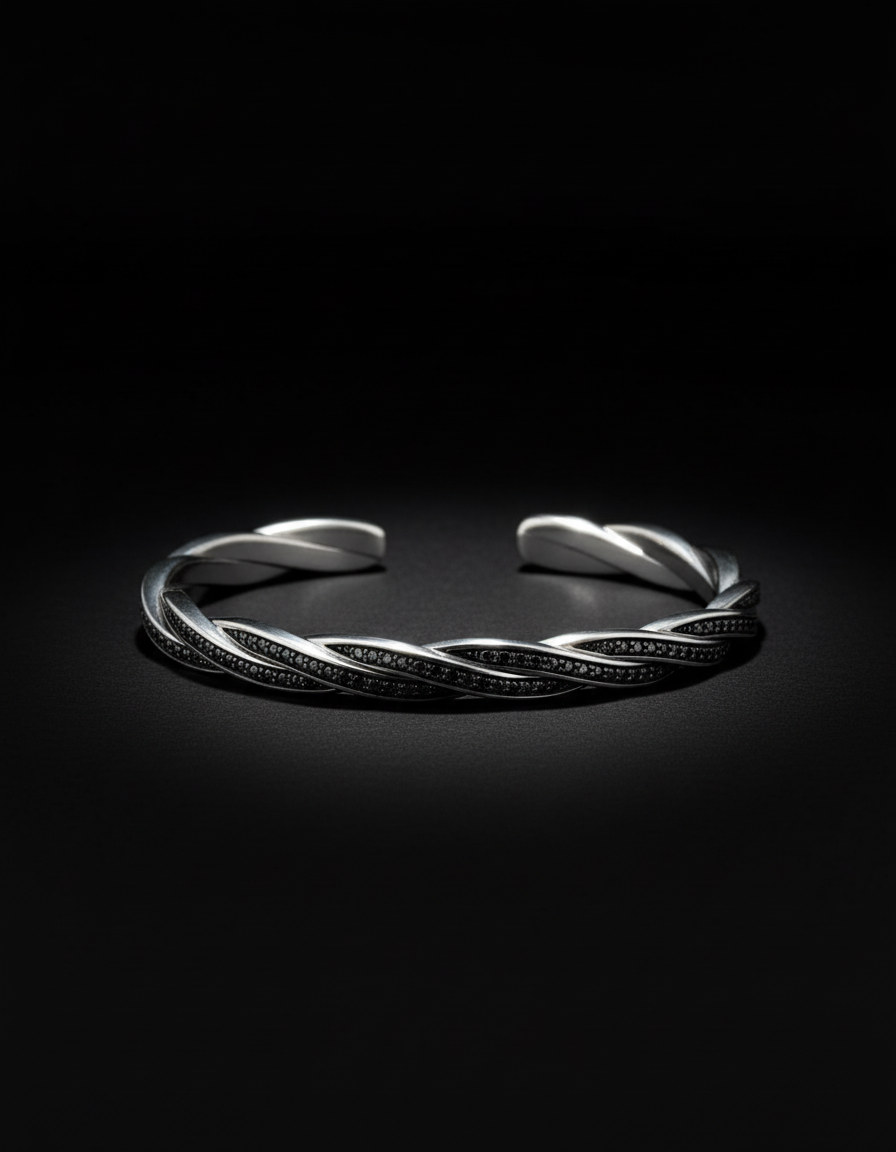
AXIOM lists one price on each product page rather than a weight-plus-making bill. Most of the collection is 925 sterling silver set with natural black or lab-grown white diamonds, the kind of piece where the stones and the setting, not the grams of silver, are what you are paying for, and each piece is made to order and hand-finished at the Bharat Diamond Bourse in Mumbai. If you want to know what is in a particular piece before you buy, ask us; certification details for diamond pieces are available on request.
The practical takeaway: for plain silver, insist on net weight, the 925 purity factor and making charges in rupees, then do the sum yourself. For diamond-set silver, stop counting grams and start asking about the stones and the work.
