
Office jewellery is less about rules than about attention. At work, anything you wear either sits quietly in the background or pulls a colleague's eye away from what you are saying. The pieces that work are the ones nobody comments on until they notice, weeks later, that you always look put together.
Indian workplaces vary enormously, from a Mumbai investment bank to a Bengaluru start-up to a family business in Surat, and there is no single standard. This guide gives you a spectrum instead: what almost always passes, what depends on your industry, what to save for the weekend, and the practical problems nobody warns you about, such as desk wear on bracelets and building security scanners.
What jewellery is appropriate for men at work?
Small, quiet pieces in one metal colour are appropriate almost everywhere. The safe list for any office in India is short:
- A wedding band or plain ring, and a signet on the other hand if you wear one.
- A watch, which most offices treat as a tool rather than jewellery.
- A slim bracelet or kada that fits under the shirt cuff.
- Cufflinks with French-cuff shirts, kept plain and small.
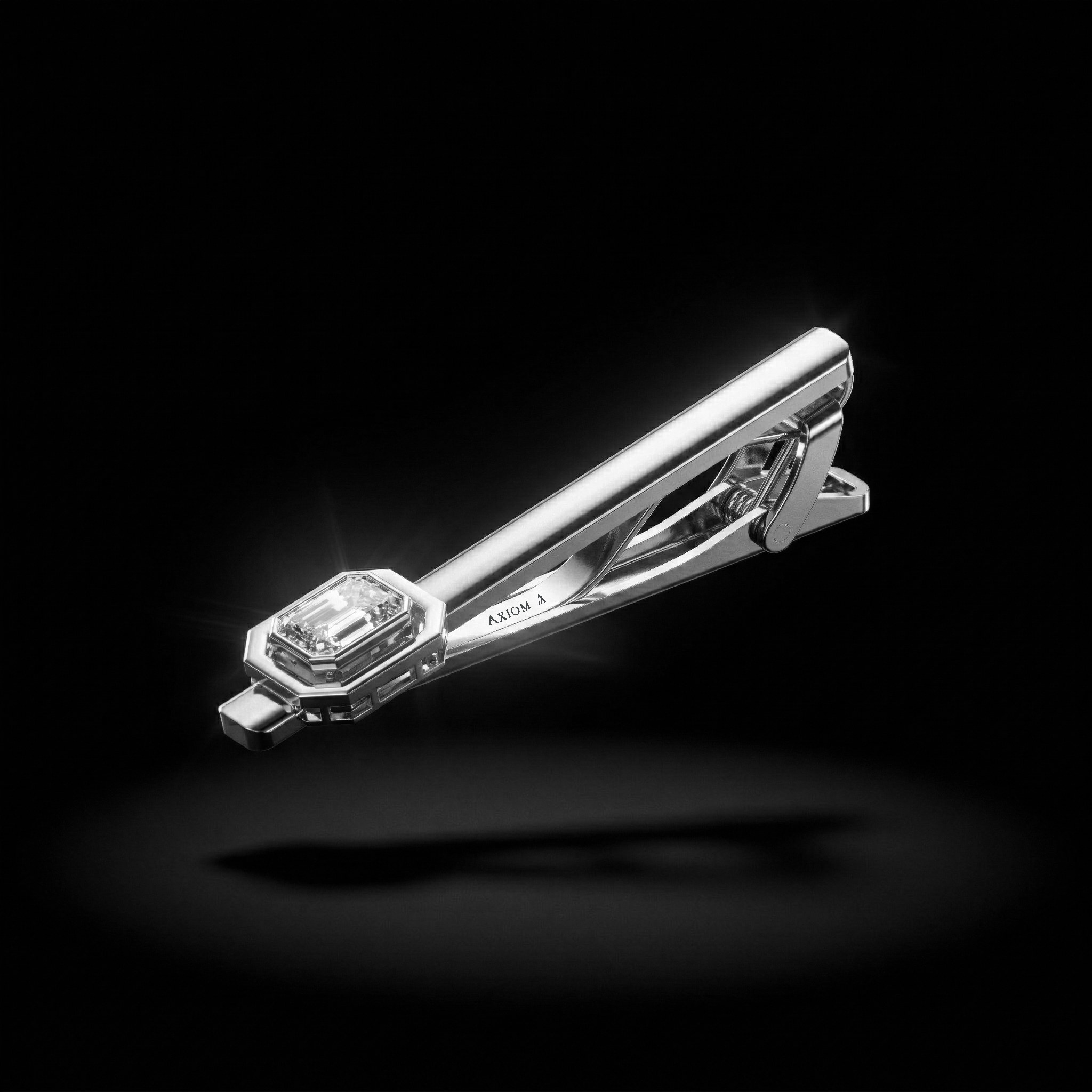
- A tie bar or tie pin if you wear a tie.
- A lapel pin on a suit or blazer, if it is small.
The riskier list, in conservative offices, is just as clear: chains worn over the shirt, three or more rings, large stone-set pieces, hoops or statement earrings, and anything that makes noise. None of these is wrong. They simply draw attention in rooms where the norm is restraint.
What passes in different industries?
Workplace norms in India differ more by industry and by how client-facing your role is than by city. The table gives a realistic picture, but your own manager and your company's written dress code, if there is one, outrank it.
| Industry or setting | What usually passes | What to save for weekends |
|---|---|---|
| Banking, finance, consulting | Band, signet, watch, plain cufflinks, tie bar | Visible chains, earrings, stacked bracelets |
| Law and courts | Band, watch, discreet cufflinks | Anything with visible stones, earrings |
| Government and PSU | Band, watch, kada, religious thread or pendant under the shirt | Statement rings, fashion earrings |
| Tech and start-ups | Band, rings, watch, slim bracelet, small stud | Heavy chains in client meetings |
| Media, design, advertising | Most things in proportion, including earrings and layered bracelets | Very little, if the look is deliberate |
| Hospitality and retail, front of house | Band, watch, per the employer's grooming code | Anything outside the grooming code |
| Healthcare and labs | Whatever the hygiene policy allows, often a plain band only | Bracelets, watches and stone-set rings on clinical or lab duty |
Two things cut across every industry. Client-facing days call for less than internal days. And a senior role gives you more latitude than a junior one, but seniors also tend to use it sparingly.
Are men's earrings unprofessional?
Men's earrings are no longer unprofessional in most workplaces, but they are still read differently depending on size and setting. A single small stud is unremarkable in tech, media and creative work, and increasingly common across corporate India. Hoops, large stones and multiple piercings still stand out in conservative client-facing roles.
If you are unsure, three questions settle it: does your company's dress code mention jewellery, do senior people in your team wear earrings, and are you meeting clients whose norms differ from your own? A small stud that you can swap for a plain one on a client day is the practical middle ground. Our guide on which ear men wear earrings in covers the conventions.
What jewellery works for Indian office occasions?
Indian offices have their own calendar, and it changes what is appropriate. On ethnic-wear days, Diwali celebrations or a colleague's wedding reception, the ceiling rises.
- Ethnic Friday or festival day: a kurta allows a pendant worn outside, a kada and a ring, all in one metal.
- Office Diwali party: your daily pieces plus one more, such as a bracelet or a lapel pin on a bandhgala.
- Colleague's wedding or reception: dress as a guest, not as the office version of yourself; kurta buttons, a kada or cufflinks all fit.
- Board meeting or interview: strip back to band, watch and, if wearing French cuffs, plain cufflinks.
Practical problems: typing, desks and scanners
The practical side of office jewellery gets less attention than the style side, and it is usually what makes a piece wearable or not.
Typing and desk wear. Bracelets on the writing wrist rest on the desk edge and the laptop palm rest all day. Metal on aluminium leaves marks on both, and stones can scratch a laptop body. On the writing wrist, choose a smooth bracelet or kada without raised settings, and keep diamond-set pieces for days away from the laptop. Rings with high settings catch on keyboards and bag straps; a flush-set or plain band avoids that.
Noise. Loose link bracelets and several bangles click against the desk and keyboard. In an open office and on video calls, that sound carries.
Cuffs. A bracelet that stops your shirt cuff from closing, or pushes a French cuff out of line, is too big for work. Check the fit with the shirts you actually wear.
Security scanners. Heavy metal pieces, such as a thick kada or a heavy chain, can trigger walk-through metal detectors depending on their sensitivity. Rings, studs and slim chains usually pass. If your building screens every morning, lighter pieces save time.
Common men's jewellery mistakes at the office
Most office jewellery mistakes are about competing pieces, not individual ones.
- Wearing everything you own on day one of a new job. Start with a band and a watch, then read the room.
- Mixing metal colours without meaning to: a yellow-gold ring, steel watch and silver bracelet together look accidental.
- Chain over a buttoned shirt and tie. It belongs inside the collar with formal wear.
- Stone-set cufflinks and a jewelled tie bar together. One piece with stones is enough.
- Pieces that need adjusting. A pendant that twists or a bracelet that slides into your palm will distract you as much as anyone else.
For a fuller view of limits, see how much jewellery a man should wear.
Tie bars, cufflinks and lapel pins at work
These three are the most office-appropriate jewellery a man can wear, because they have a job to do. A tie bar holds a tie in place, especially useful when you work without a jacket through a humid summer. Cufflinks fasten a French cuff. A lapel pin finishes a suit or blazer.
Keep them plain for daily wear and in the same metal colour as your watch. Our guides to the tie pin vs tie clip and how to wear cufflinks cover placement.
How AXIOM approaches this
Our Code Collection is built around the idea we describe as "engineered precision expressed through structure, symmetry, and disciplined design", which is close to what an office needs. It includes the Axis Ring, in 925 sterling silver, and the Lineage Tie Pin in 925 sterling silver with lab-grown white diamonds. Tie pins, lapel pins and buttons across all our collections sit in our men's accessories range.
The practical takeaway
Start any new job with a band and a watch, watch what senior colleagues wear for a month, then add one piece at a time. Keep it quiet, keep it in one metal, keep chains inside the collar, and keep the bolder pieces for the Diwali party.
