
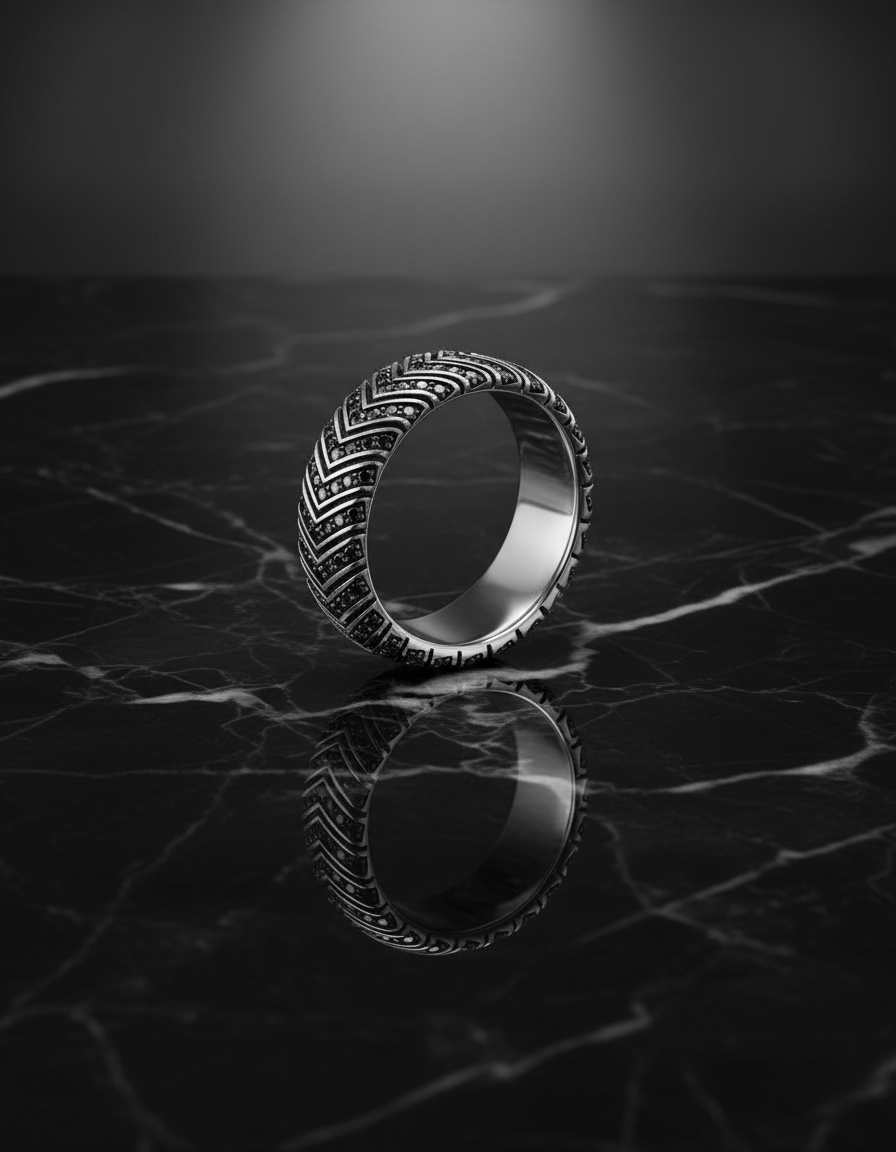
On a jeweller's tray, a new sterling silver ring and a new white gold ring look almost the same: bright, cool, white metal. The difference shows up in the price tag, in the weight in your hand, and in how each looks after five years of wear. This comparison is for anyone choosing between the two for a ring, band or pair of earrings, and especially for designs offered in both metals.
What is the difference between sterling silver and white gold?
The difference is the base metal. Sterling silver is 92.5 percent silver and 7.5 percent other metal, usually copper. White gold is real gold mixed with white metals to pale its colour; 18K white gold is 75 percent gold, with the remaining 25 percent typically palladium, silver, nickel or a mix, depending on the maker.
Most white gold is then plated with rhodium, a hard, bright white metal from the platinum family. The plating is what gives white gold its mirror-white finish. Underneath, the alloy is often a very pale grey or faintly warm white.
| Point of comparison | 925 sterling silver | 18K white gold |
|---|---|---|
| Precious metal content | 92.5% silver | 75% gold |
| Colour when new | Bright white | Bright white (from rhodium plating) |
| Colour over time | Tarnishes darker; polishes back | Plating wears; warmer tone shows through |
| Hardness | Softer; scratches and dents more easily | Harder; keeps edges and settings crisp |
| Weight | Lighter | Roughly 40 to 60 percent heavier for the same size, depending on the alloy |
| Upkeep | Polish tarnish; occasional professional clean | Re-plate rhodium periodically |
| Hallmark in India | Voluntary: BIS logo with SILVER, 925 and HUID | Mandatory in notified districts: BIS logo, 18K750 and HUID |
| Allergy note | Usually copper alloy | Some alloys contain nickel |
| Price basis | Silver rate by weight, plus making | Gold rate by weight, plus making |
Is sterling silver or white gold better?
Neither is better in every case. White gold is the more durable, more valuable metal; sterling silver is the more affordable, easier-to-maintain one. The right choice depends on how the piece will be worn.
| If you want | Better choice | Why |
|---|---|---|
| A daily wedding band for decades | White gold | Harder metal holds shape and stones longer |
| A statement ring or earrings on a budget | Sterling silver | Same look at a fraction of the price |
| Low maintenance with no plating | Sterling silver | Tarnish polishes off; nothing to re-plate |
| Metal that holds value as metal | White gold | Gold content is worth far more per gram |
| A lighter feel on the hand or ear | Sterling silver | Less dense metal |
| Heavy manual work while wearing it | White gold | Resists dents and scratches better |
If you are weighing other white metals too, white gold vs platinum covers the premium end, and solid gold vs sterling silver compares gold and silver more broadly.
How durable is each metal?
White gold is clearly the harder of the two. In an 18K alloy, the gold is strengthened by the other metals, and the result resists dents and holds claws and channels firmly. Sterling silver is softer, so a ring worn every day will pick up fine scratches and, over years, can lose sharp edges or thin at the base of the band.
That does not make silver fragile. A well-made sterling piece with sensible proportions will last many years. Stones in silver are better protected by settings that surround them, such as channel, bezel or flush settings, and all settings benefit from a yearly check. Our guide on whether sterling silver is good for wedding rings goes into daily-wear trade-offs.
What upkeep does each need?
Silver needs polishing; white gold needs re-plating. Sterling silver tarnishes as it reacts with sulphur in the air and in sweat, turning grey then darker. A silver polishing cloth removes it, and a jeweller can restore a full polish.
White gold does not tarnish, but its rhodium plating wears away where the piece rubs, such as the palm side of a ring. The alloy underneath may show as a faintly warmer tone. Re-plating is a routine job for a jeweller. How often it is needed depends on wear: a ring used daily will need it more often than earrings.
How to tell sterling silver from white gold by the stamp
The stamp is the most reliable home check. Use a 10x loupe on the inside of the ring or the post of the earring.
- Sterling silver is usually stamped 925, S925, 92.5 or Sterling. A BIS silver hallmark adds the BIS logo with the word SILVER and, on pieces hallmarked since 1 September 2025, a six-character HUID.
- 18K white gold is stamped 18K, 750 or 18K750. In India, a BIS gold hallmark consists of the BIS logo, the purity (such as 18K750) and a six-character HUID, according to the BIS hallmarking FAQ. You can check an HUID in the BIS Care app.
- Weight is a second clue. The same ring in white gold feels noticeably heavier than in silver.
- Rhodium-plated silver exists and looks exactly like white gold. The stamp will still say 925, which is why the stamp matters more than the colour.
If you want to compare gold purities as well, see 14K vs 18K gold.
How do the prices compare?
White gold costs many times more than sterling silver for the same design, because gold is priced far higher than silver per gram and white gold is also denser, so the same ring contains more grams of metal. Making charges, stones and design add to both, and those parts of the price are similar across the two metals.
We do not quote a rupee difference here because gold and silver rates move daily. To compare fairly, ask a jeweller for the metal weight in grams for each version, the purity, the making charges and the stone cost, itemised. The gap between the two quotes should be almost entirely the metal.
White gold vs platinum vs silver
Platinum is the third white metal men are usually offered, and it sits above white gold on price. Jewellery platinum is typically 95 percent pure and naturally white, so it needs no rhodium plating. It is denser again than gold, so a platinum ring feels heaviest of the three. Instead of wearing away, it scratches into a soft grey sheen that some men like and others have polished out.
| Metal | Natural colour | Plating needed | Relative weight | Relative price |
|---|---|---|---|---|
| 925 sterling silver | White | No | Lightest | Lowest |
| 18K white gold | Pale grey or warm white | Usually rhodium | Heavier | High |
| Platinum | White | No | Heaviest | Highest |
Silver or white gold for men's hoop earrings?
For earrings, the case for sterling silver is stronger than for rings. Earrings do not take the knocks a ring does, so silver's softness matters less, and its lighter weight is more comfortable in the lobe. White gold earns its price in earrings mainly for men who want metal value in a piece they will keep for a long time, or who want earrings that match a white gold ring. Check the post as well as the hoop: both should carry a purity stamp.
Resizing and repairs
Both metals can be resized and repaired by a competent jeweller. Silver is easier to work, which keeps repair costs lower. White gold needs re-plating after resizing, since the work disturbs the rhodium. One caution for both: eternity bands with stones set all the way round are difficult to resize in any metal, so get the size right at the start.
How AXIOM approaches this
Three AXIOM designs are offered in both 925 sterling silver and 18K white gold, so you can choose the metal for the same piece: the Apex Ring and the Valor Band, both set with natural black diamonds, and the Pulse Hoop earring, also with natural black diamonds. The design and stones stay the same; the metal changes the weight, the upkeep and the price.
The practical takeaway
Choose white gold if the piece is a daily band you plan to wear for decades and you accept occasional re-plating. Choose sterling silver if you want the same look for far less and do not mind polishing now and then. Whichever you choose, read the stamp, not the colour.
