
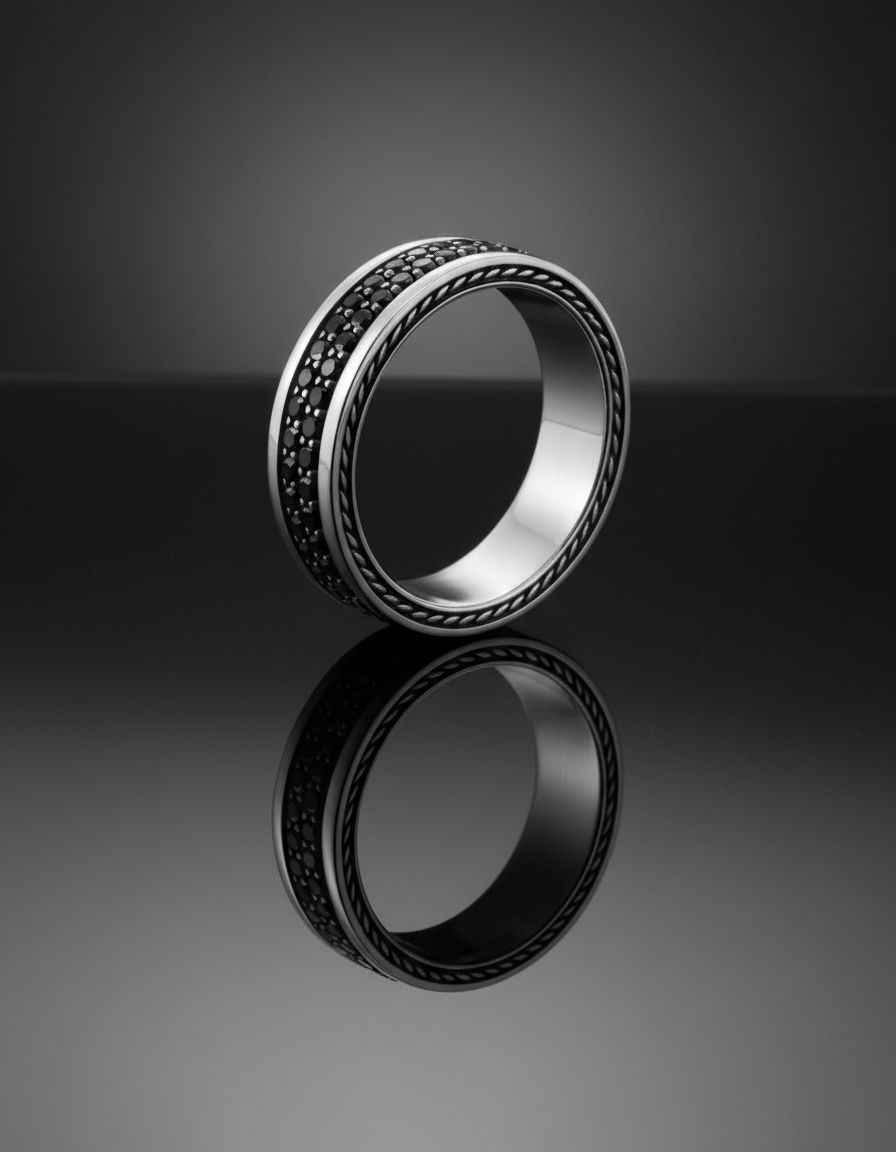
Most comparisons of these two metals are written for engagement rings in the United States, where platinum is the obvious premium choice. For a man buying a wedding band in India, the maths and the practicalities are different, and the right answer depends more on his skin, his work and his budget than on which metal sounds grander.
White gold vs platinum: the key differences
White gold is gold alloyed with white metals and usually plated with rhodium; platinum is a naturally white metal used at 95 percent purity. That single difference explains the weight, the upkeep and the allergy question.
| Factor | 18K white gold | Platinum (Pt950) | 925 sterling silver |
|---|---|---|---|
| Precious metal content | 75% gold | 95% platinum | 92.5% silver |
| Natural colour | Pale grey or cream, rhodium plated for bright white | Naturally white-grey | Bright white, tarnishes |
| Weight | Medium | Heaviest | Lightest |
| How it wears | Scratches remove a little metal; plating wears | Scratches move metal; forms a patina | Scratches and dents most easily |
| Upkeep | Rhodium replating from time to time | Occasional polish | Regular cleaning for tarnish |
| Allergy risk | Depends on alloy; nickel alloys can react | Very low | Low for most people |
| Assurance in India | BIS hallmark 18K750 with HUID | Pt 950 stamp and seller's purity assurance; no BIS hallmark | 925 stamp; BIS silver hallmark voluntary |
Which is more durable, white gold or platinum?
Platinum is more forgiving over decades; 18K white gold holds a crisp surface well in the short term. They wear differently, and that difference matters more than a single hardness number.
When platinum is scratched, the metal is largely pushed aside rather than lost, so over years a platinum band develops a soft satin patina while keeping its weight. GIA notes in its guide to white metals that platinum is denser and stronger than gold and that platinum prongs are less likely to break. White gold resists everyday scuffs well, but each scratch and polish removes a little metal, so a thin white gold band slowly thins over decades.
For a man who works with his hands, lifts weights or never takes his ring off, platinum's way of wearing is the stronger argument. For a desk job, both will last a lifetime.
Rhodium plating: the upkeep that comes with white gold
Most white gold is plated with rhodium to make it bright white. GIA notes that rhodium plating wears away gradually and the ring needs replating occasionally; on a man's band worn daily, the palm side usually shows wear first.
Underneath, 18K white gold has a slightly warm grey or cream tone, which is why worn white gold can look faintly yellow. Replating is quick and inexpensive at most jewellers, but it is a recurring task. Platinum needs no plating: its colour is the metal itself, and a polish restores the shine.
Weight and feel on the hand
Platinum is much heavier. Pure platinum has a density of about 21.5 grams per cubic centimetre, according to the Royal Society of Chemistry, against 19.3 for pure gold and about 10.5 for silver. Since a quarter of 18K white gold is lighter alloy metal, the same band in platinum weighs noticeably more.
Some men like the heft; it feels substantial and they stop noticing it within a week. Others find a wide, heavy band tiring. If you are unsure, try both on for a full minute, not a few seconds.
Allergy: is white gold or platinum better for sensitive skin?
Platinum is the safer choice for sensitive skin. It is used at 95 percent purity and is widely described as hypoallergenic, while white gold depends entirely on its alloy.
GIA lists nickel or palladium, with copper and zinc, as the metals alloyed with gold to make it white, and advises people allergic to nickel to avoid nickel white gold. Rhodium plating hides the alloy at first, but once it wears, skin meets the metal underneath. If you have reacted to cheap watches or belt buckles, ask whether the white gold is palladium based, or choose platinum.
White gold vs platinum price in India
In India, platinum is not automatically the costlier option. Both metals are priced per gram at their own daily rates, and at the time of writing (28 September 2026), the published per gram rate for platinum in India was a little under half the 18K gold rate.
Three things push a platinum band's final price up again:
- Weight. The same design uses more grams of platinum because the metal is denser.
- Purity. Pt950 is 95 percent precious metal against 75 percent in 18K.
- Making charges. Platinum melts at a much higher temperature than gold and needs specialist casting and finishing, so making charges are usually higher.
The honest method is to get two quotes for the same design and width, each broken into metal weight, metal rate, making charges and GST. The rates of gold and platinum move independently, so the cheaper option can change from one year to the next. For how the gold side of a bill is built, see gold making charges explained.
Do white gold and platinum look different?
Side by side and new, freshly rhodium plated white gold looks slightly brighter and cooler than platinum, which has a deeper grey-white tone. Most people cannot tell them apart across a table.
The difference grows with time. Platinum keeps its colour and gains a satin patina that can be polished back to a mirror shine. White gold keeps its colour only as long as the plating lasts, then drifts towards its warmer natural tone until it is replated. If your partner wears a platinum ring and you choose white gold, expect the two to look slightly different after a year or two unless you replate.
Resizing, repairs and resale
Both metals can be resized and repaired, but they need different skills. White gold is handled by almost any competent goldsmith, and a resized white gold ring is replated afterwards so the joint does not show. Platinum's high melting point means resizing and repairs are best done by a jeweller who works with it regularly, which can mean fewer choices outside large cities.
Resale is where gold has the clearer path in India. Gold is bought back and exchanged by jewellers everywhere on its tested purity, while the platinum resale market is smaller. If resale matters to you, ask the seller before you buy what they would pay back for the piece, and get the answer in writing.
How to check platinum and white gold are genuine
White gold sold in India should carry a BIS hallmark with a purity grade such as 18K750 or 14K585 and a six character HUID that verifies in the BIS Care app. The white colour tells you nothing about the karat, so read the stamp.
BIS hallmarks gold and silver, and India's mandatory hallmarking order covers gold only, so there is no BIS hallmark for platinum. Platinum jewellery is normally stamped Pt 950, and GIA gives Pt950 (950 parts of platinum per thousand) as the standard marking. For any platinum piece, ask for the stamp, a written purity assurance from the seller and an itemised bill that states the weight and purity.
White gold vs platinum vs silver: a verdict by wearer
There is no single winner. Match the metal to the man.
| Wearer or priority | Best choice | Why |
|---|---|---|
| Nickel sensitivity or allergy | Platinum | Hypoallergenic at 95 percent purity |
| Manual work, gym, never removes ring | Platinum | Wears to patina without thinning quickly |
| Desk job, wants bright white | 18K white gold | Lighter, crisp finish, replate as needed |
| Wide or heavy band | 18K white gold | Platinum can feel heavy at large widths |
| Tight budget, white look | 925 sterling silver | Far lower cost; softer and tarnishes |
| Matching a partner's platinum ring | Platinum | Same colour and wear over time |
Silver deserves a mention because many men searching "white gold vs platinum vs silver" are really asking about budget. 925 silver gives a white metal look at a fraction of the cost, but it is softer and tarnishes. Our comparison of sterling silver vs white gold covers that trade-off, and the men's wedding band guide covers widths, profiles and fit. The karat question within white gold is covered in 14K vs 18K gold.
AXIOM does not list platinum; its rings and bands are made in 925 sterling silver, with 18K white gold offered on designs such as The Valor Band.
The practical takeaway
Choose platinum if allergy or hard wear is the concern and you like a heavier ring. Choose 18K white gold if you want a lighter band with a bright finish and do not mind occasional replating. In either case, compare quotes for the same design, line by line, at that week's rates.
