
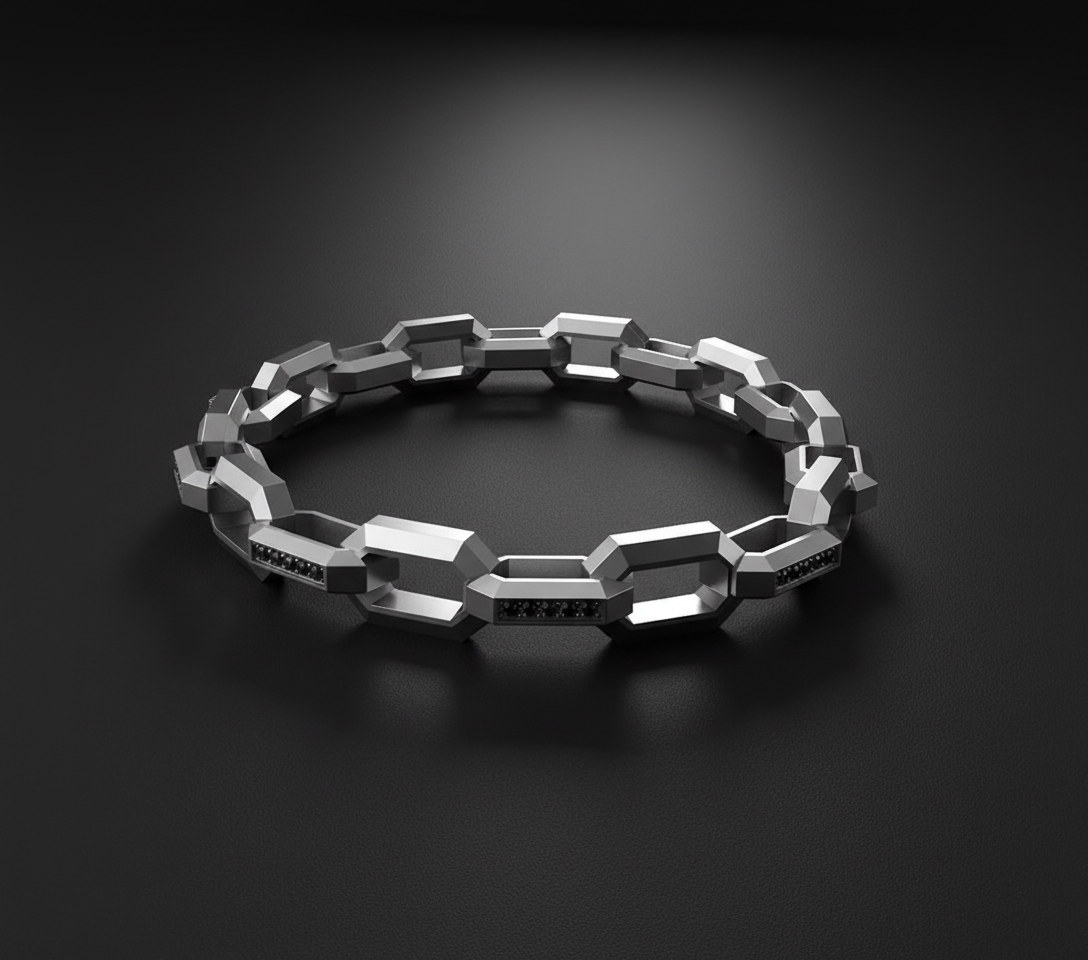
A silver bracelet is the easiest way for most men to start wearing jewellery. It costs a fraction of gold, looks right with a watch and a shirt, and is real precious metal rather than fashion alloy. It is also the category with the most confusion, because "silver" on a listing can mean solid sterling, silver-plated brass or German silver, which contains no silver at all. This guide covers what to check so you buy the first kind.
What should you look for in a men's silver bracelet?
Look for five things: purity, weight, link construction, clasp and fit. Design comes after these, because a well-designed bracelet with a weak clasp or hollow links will not last.
- Purity: 925 sterling silver, stamped.
- Weight: a net silver weight that suits how often you will wear it.
- Links: solid rather than hollow for daily wear.
- Clasp: secure and matched to the bracelet's weight.
- Fit: long enough to move, short enough not to slide over the hand.
925 vs pure silver vs plated: which is real?
925 sterling silver is the right choice for a bracelet. It is 92.5% silver and 7.5% other metal, usually copper, which makes it strong enough to hold links and clasps. The alternatives are either too soft or not silver.
| Label | What it is | For a bracelet |
|---|---|---|
| 999 / fine silver | 99.9% silver | Too soft; links stretch and clasps wear |
| 925 / sterling silver | 92.5% silver, 7.5% alloy | The standard for bracelets and chains |
| Silver-plated | Base metal with a thin silver coat | Plating wears through; no silver value |
| German silver / nickel silver | Copper, nickel and zinc; no silver | Not silver at all; nickel may irritate skin |
| Oxidised silver | Real silver darkened on purpose | Fine if it is 925 underneath; ask |
In India, BIS hallmarks silver jewellery under IS 2112:2025 in seven grades from 800 to 999, according to the government release announcing silver HUID; silver hallmarking is voluntary. A 925 stamp plus a BIS mark is the strongest assurance you can get. For the full comparison, see sterling silver vs pure silver vs German silver.
How heavy should a silver bracelet be?
Choose weight for wear, not for show. Weight comes from width, link pattern and whether the links are solid or hollow, so two bracelets of the same width can differ a lot.
| Width (roughly) | Feel | Best for |
|---|---|---|
| 3 to 5 mm | Light and fine; disappears under a cuff | Office, first bracelet, stacking with a watch |
| 6 to 8 mm | Solid and noticeable; the everyday middle | Daily wear, most wrists |
| 9 mm and over | Heavy and bold; you feel it at a desk | Weekends, statement wear, larger wrists |
Two checks help. First, ask for the net silver weight in grams and whether the links are solid. Second, pick it up: a wide chain that feels feather-light is hollow, and hollow links dent, kink and are hard to repair.
Which link and clasp types last?
For a bracelet you wear daily, choose tight, solid links and a clasp matched to the weight.
Links. Curb and box links lie flat and resist kinking. Figaro is a curb variation with longer links in the pattern. Rope looks formal but can snag. Cable links are simple and light. Wider, heavier curb links are often sold as Cuban.
Clasps.
| Clasp | How it works | Best for |
|---|---|---|
| Lobster | Spring-loaded hook you pinch open | Light to medium chains |
| Box (tongue and groove) | A tab clicks into a box, often with a side safety catch | Medium to heavy chains, diamond bracelets |
| Fold-over | A hinged plate folds shut over a hook | Heavy chains and link bracelets |
| Toggle | A bar passes through a ring | Fashion pieces; easier to lose |
Whatever the clasp, open and close it several times before buying. It should close firmly and not open under a light tug.
Which silver bracelet design suits you?
The design should match where the bracelet will spend most of its time. Five designs cover nearly everything men buy:
- Plain chain (curb, box, rope): the most versatile. Works with a watch, a shirt and a kurta.
- ID or bar bracelet: a chain with a flat plate, plain or engraved. A good gift, because engraving personalises it.
- Cuff: rigid, with an opening at the back. Strong presence, no clasp to fail.
- Link bracelet with set stones: articulated silver links with black or white diamonds. Smart enough for evenings, subtle enough for the office if the stones are small.
- Oxidised or textured silver: darkened recesses and hammered or engraved surfaces. Hides scratches well and suits casual wear.
If you are unsure, start with a 5 to 7 mm solid curb or box chain. It goes with almost everything, and it tells you whether you enjoy wearing a bracelet before you spend more.
How is a silver bracelet priced?
A silver bracelet's price is built from four parts: silver value, making charges, stones and GST. Knowing the split helps you judge whether a price is fair.
- Silver value: net weight in grams multiplied by the day's silver rate, adjusted for 925 purity. Silver is far cheaper per gram than gold, so on most bracelets this is the smaller part of the bill.
- Making charges: casting or chain-making, soldering links, fitting the clasp, polishing. Hand-finished and articulated designs cost more to make.
- Stones and setting: priced separately where present.
- GST: added at the applicable rate.
Because silver rates change daily, compare two plain bracelets by net weight and making charges, not by the final price. If a seller will not tell you the weight, you cannot tell what you are paying for.
Silver bracelets with stones: what are you paying for?
With stones, most of the price is the stones and the setting, not the silver. A plain silver bracelet is priced mainly on silver weight and making charges. Add diamonds and two new costs appear: the stones themselves and the hours needed to set each one by hand.
That is why two bracelets of similar silver weight can be priced many times apart. When comparing stone-set bracelets, ask for:
- Stone type: natural or lab-grown, black or white.
- Total carat weight across all stones.
- Setting style: bezel and channel are the most secure; pavé and prong need checking.
- Certification details for the stones.
Sterling silver is softer than gold, so stone-set silver bracelets need well-built settings and a yearly check. Our men's diamond bracelet guide covers settings and pricing in detail.
How should a men's silver bracelet fit?
A chain or link bracelet should be about 1.5 to 2.5 cm longer than your wrist for a comfortable fit. Measure the wrist just below the wrist bone with a soft tape or a strip of paper, then add the allowance.
- Closer fit (about 1 cm extra): for fine chains worn next to a watch.
- Comfortable fit (about 1.5 to 2.5 cm extra): for most everyday bracelets.
- Loose fit (more than 2.5 cm): for heavy links that should drape.
Rigid silver cuffs are sized to the wrist and kadas to the hand. Our men's bracelet size guide has full charts.
Does a silver bracelet tarnish, and is it safe for skin?
Silver tarnishes slowly, and it is one of the safer metals for skin. Tarnish is a dark film that forms when silver reacts with sulphur compounds in air, sweat and some cosmetics; humidity speeds it up. A bracelet worn often stays brighter because wear polishes it, and a silver cloth restores the rest. Read does sterling silver tarnish for the full routine.
On skin, DermNet notes that silver jewellery should be safe for people with nickel allergy, one of the most common causes of allergic contact dermatitis. The exception is anything that is not really silver: plated base metal and German silver can contain nickel.
Everyday care:
- Take it off for the gym, swimming pools and cleaning with chemicals.
- Wipe it with a soft silver cloth when it dulls.
- Store it in a closed pouch or zip bag when not wearing it.
- Have the clasp and any stones checked once a year.
How AXIOM approaches this
AXIOM's bracelets are solid 925 sterling silver rather than plated base metal, and set with diamonds whose type is stated on each piece. The Prime Bracelet is offered with natural black diamonds or with lab-grown white diamonds (from ₹97,840 at the time of writing for the lab-grown white diamond version), and the Code Bracelet is set with natural black diamonds. Every piece is made to order at the Bharat Diamond Bourse in Mumbai; the full bracelets and kada range lists metal and stones for each.
The practical takeaway
Buy 925, check the stamp and the net weight, choose solid links with a clasp that clicks firmly, and size it about two centimetres longer than your wrist. If you want stones, compare stone type and total carat weight rather than the silver.
