
Steel is the toughest and cheapest kada, silver is the best value as an ornament, and gold is the one that holds its metal value. Which is right for you depends on what the kada is for: a faith object, an everyday band that never comes off, or a piece of fine jewellery. Once you know which, the metal usually chooses itself. This guide compares iron and steel, 925 sterling silver and gold in 18K and 22K on the things that matter after the first week of wearing one.
Gold vs silver vs steel kada: the short comparison
Steel wins on toughness and cost, silver on value for money as an ornament, and gold on metal value and presence. The table puts the five common options side by side.
| Metal | Daily wear | Upkeep | How the price is set | Best for |
|---|---|---|---|---|
| Iron | Hard, darkens with age | Rusts if left wet; dry it and oil it | Mostly labour | Traditional kara |
| Stainless steel | Hardest of the five, resists scratches | Almost none | Mostly labour and brand | Everyday kara, gym, water |
| 925 sterling silver | Comfortable, scratches with wear | Tarnishes; polish now and then | Silver weight x rate, plus making | Ornamental kada at a moderate budget |
| 18K gold (75% gold) | Holds shape and detail well | Low; yearly check | Gold weight x rate, plus making | Gold kada worn every day |
| 22K gold (91.6% gold) | Soft; dents and scratches easily | Handle with some care | Gold weight x rate, plus making | Traditional gift, heirloom, occasional wear |
The rest of this guide explains each column, because the right answer depends on which one matters most to you.
Which kada metal is heaviest?
Gold is by far the heaviest, then silver, then steel. Weight comes from density, and the difference is large enough to change how a kada feels on the wrist all day.
Using published densities for the pure metals from PubChem (gold 19.28, silver 10.50, iron 7.87 grams per cubic centimetre), and working out approximate figures for the common alloys, here is what the same kada, identical in size and shape, would weigh in each metal.
| Metal | Approximate density (g/cm³) | Same kada, if the steel one weighs 30 g |
|---|---|---|
| Iron or stainless steel | about 7.9 | 30 g |
| 925 sterling silver | about 10.4 | about 39 g |
| 18K yellow gold | about 15.4 | about 58 g |
| 22K gold | about 17.8 | about 67 g |
The alloy figures are estimates (the exact number depends on the other metals mixed in), but the ratios hold. A gold kada is roughly twice the weight of a steel one of the same size. That is why gold kadas are often made hollow or slimmer: a solid 22K kada at steel proportions would be very heavy and very expensive.
Which kada scratches least?
Stainless steel scratches least, then 18K gold, then sterling silver and 22K gold. Hardness matters more on a kada than on most jewellery, because a kada knocks against desks, doorframes and car doors all day.
- Steel is much harder than any precious-metal alloy. It still shows fine scratches over years, but it will not dent in normal wear.
- 18K gold is a quarter alloy metal, which gives it enough hardness to keep an engraving, a texture or a crisp edge for a long time.
- 925 silver is 7.5% alloy, usually copper, which makes it far tougher than pure silver but still softer than steel. Expect a soft, satin look after months of wear.
- 22K gold is nearly pure, rich in colour, and soft. It dents if knocked hard and loses sharp detail faster.
Scratches on silver and gold can be polished out by a jeweller. Steel is harder to refinish at home, although it rarely needs it.
Does a silver kada tarnish, and does gold or steel?
Silver tarnishes; gold and stainless steel essentially do not. Silver reacts with sulphur compounds in the air, in sweat and in some soaps and perfumes, forming a thin dark film. Humid monsoon air and coastal cities speed it up.
For a kada this is less of a problem than it sounds. A kada worn every day rubs against skin and cuffs, which polishes it continuously, so it is the kada left in a drawer that goes black. Iron is the exception among the base metals: it rusts if left wet, which is why iron karas are dried after washing and occasionally oiled. For a full explanation of why silver darkens and how to reverse it, see does sterling silver tarnish.
Will a kada irritate your skin?
Most people can wear all of these metals without trouble. The common cause of a reaction is nickel, not the main metal. DermNet, the New Zealand dermatology reference, lists nickel allergy as one of the most common causes of allergic contact dermatitis and names the wrist as a typical site. It notes that hypoallergenic stainless steel, solid gold of 12 carat or more, and silver jewellery should be safe, while nine-carat gold and white gold can contain nickel.
In practice:
- If you have a known nickel allergy, ask what grade of steel a steel kada is and whether it is described as nickel-safe.
- Sterling silver and yellow gold of 18K or 22K are the safest choices for sensitive skin.
- A green or dark mark on the skin under a silver kada is usually a harmless reaction between the copper in the alloy and sweat. It washes off.
How is a kada priced?
A steel kada is priced by labour; a silver or gold kada is priced by weight. That single difference explains why a steel kada costs a few hundred rupees and a gold kada of the same size can cost many thousands.
For silver and gold, a jeweller's bill is built like this:
- Metal value: the day's rate per gram for that purity, multiplied by the net metal weight.
- Making charges: labour for casting, shaping, finishing and any engraving, charged as a percentage of metal value or a fixed amount per gram.
- Stones: priced separately, and often the largest cost on a diamond-set kada.
- GST: added on the total at the rate in force when you buy.
Because gold and silver rates move daily, any price you see quoted is a snapshot. Compare kadas by net weight and making charges, not by the final number. A heavy plain kada and a lighter kada set with stones can cost the same for completely different reasons.
Resale follows the same logic. A gold kada keeps most of its value as metal, although you lose the making charges when you sell. A silver kada keeps its silver value, which is a small share of what a designed piece costs. A steel kada has almost no resale value.
Which metal is right for a Sikh kara?
For a Sikh kara, the answer comes from faith, not from this comparison. The Sikh Rehat Maryada published by the SGPC describes the kara as a steel bracelet and says it should be of pure steel. Iron karas are also traditional. The plainness is deliberate: the kara is a reminder of restraint and of the Guru, not an ornament.
Many Sikh men also wear a gold or silver kada as jewellery, especially at weddings, and families differ in practice. What is widely understood is that a gold or silver kada does not take the place of the kara for a Sikh who has taken amrit. If this is your reason for buying, choose plain steel or iron and follow your own tradition. Our explainer on the kada meaning and the kara covers the faith context.
Which kada should you buy?
Match the metal to how you will actually live with it.
| If you... | Choose |
|---|---|
| Wear it for faith | Plain steel or iron |
| Never want to take it off, including gym and swimming | Stainless steel |
| Want an ornament at a moderate budget and do not mind occasional polishing | 925 sterling silver |
| Want a gold kada you wear every day | 18K gold |
| Want a traditional gift or heirloom, worn more carefully | 22K gold |
| Have sensitive skin | Sterling silver or 18K or 22K yellow gold |
Before paying for silver or gold, check three things: the purity stamp (925 for sterling silver; the BIS mark, purity grade and six-digit HUID for hallmarked gold), the net weight on the bill, and whether the kada is solid or hollow. Then size it to your hand, not your wrist, using our kada size guide.
How AXIOM approaches this
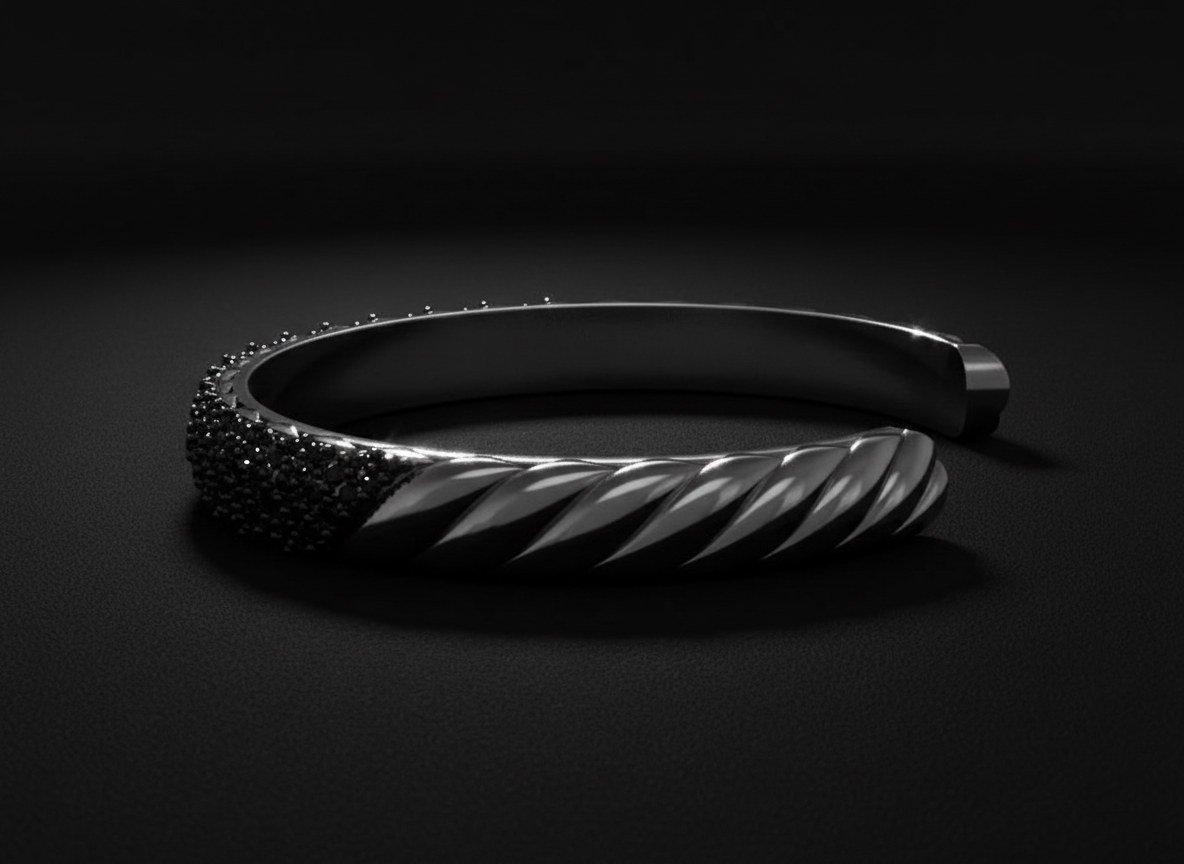
AXIOM's kadas are ornaments, not karas, and they are made in 925 sterling silver rather than steel or gold. The Strength Kada and The Torque Kada are solid 925 sterling silver, not plated base metal, set with natural black diamonds, from ₹82,500 and ₹1,14,600 respectively at the time of writing. On pieces like these the stones and the setting work, not the silver weight, make up most of the price. The full range is in our bracelets and kada collection.
The practical takeaway
Steel for faith and for a band that never comes off. Silver for an everyday ornament you are willing to polish. Gold, preferably 18K, for a kada you want to wear daily and keep for life. Weigh it, check the stamp, and buy for the life your wrist actually has. For a buying guide to the middle option, read silver kada for men.
