
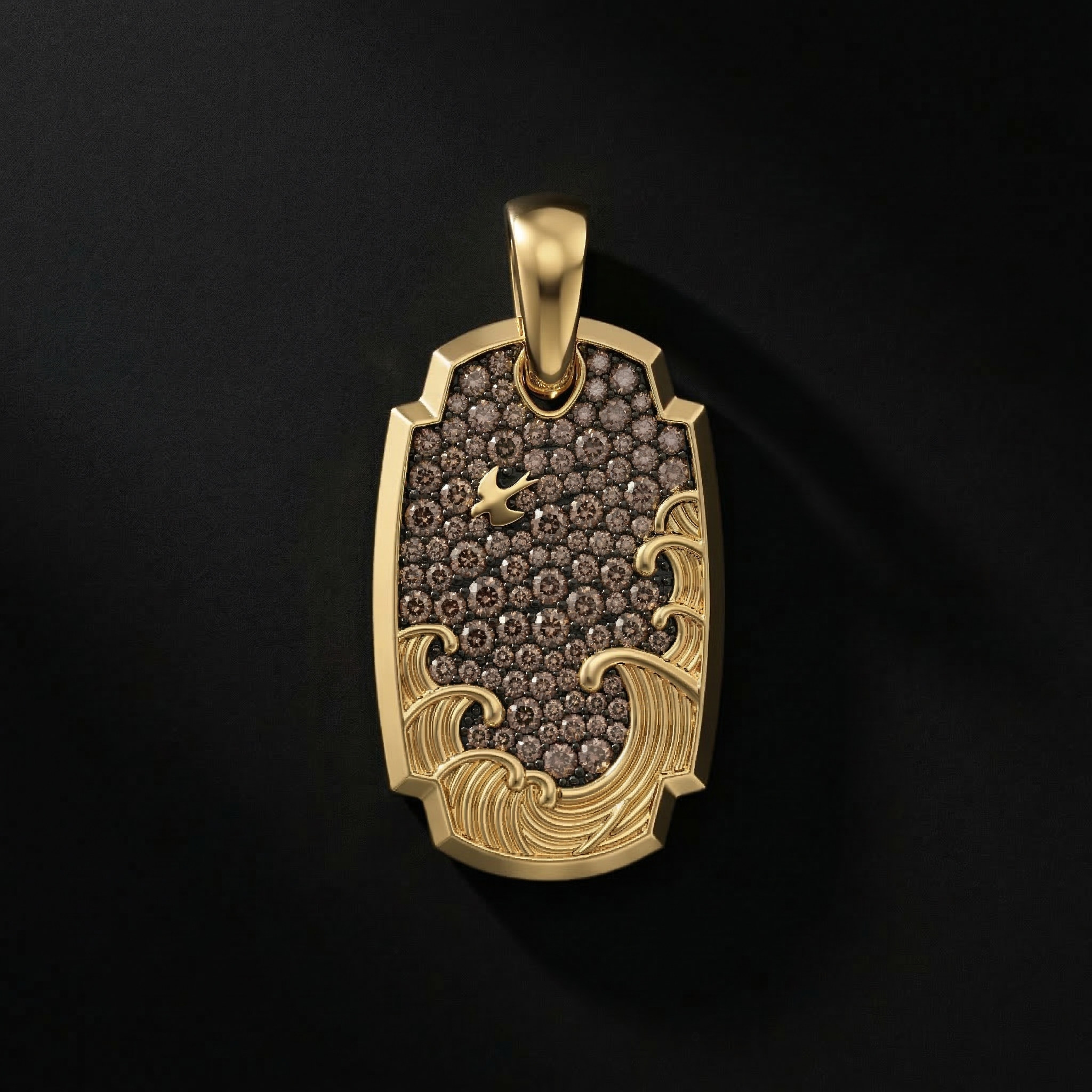
A men's chain online can cost ₹800 or ₹80,000 and look nearly identical in the product photo. The difference is almost always what lies under the surface, and it decides how long the piece keeps its colour, whether it can be repaired, whether it will mark his skin, and whether it has any value left after years of wear. This guide sets out the categories plainly so you know what each price is buying.
What is the difference between fine and fashion jewellery?
Fine jewellery is made of solid precious metal all the way through, typically gold (such as 18K or 22K), platinum or sterling silver, often set with genuine stones. Fashion jewellery, also called costume or artificial jewellery, is made of base metals such as brass, copper alloys, zinc alloys or steel, sometimes coated with a thin layer of gold or silver.
Between them sits demi-fine jewellery: pieces with a precious metal base or a thicker precious coating, but still coated rather than solid gold.
The categories compared
| Category | Made of | How the finish ages | Hallmark and repair | Price is based on |
|---|---|---|---|---|
| Fine: solid gold | Gold alloy all through, e.g. 18K (75% gold) | Colour is the metal itself | BIS hallmark; fully repairable | Metal weight, making, stones |
| Fine: sterling silver | 925 silver all through (92.5% silver) | Tarnish polishes off | Can be hallmarked; fully repairable | Metal weight, making, stones |
| Demi-fine: gold vermeil | Sterling silver with a gold coating | Coating wears on contact points over time | Silver can be hallmarked, not the gold | Design, silver value, gold layer |
| Demi-fine: gold-filled | Base metal with a thick bonded gold layer | Long-lasting for a coated piece | Not gold jewellery | Design and gold layer |
| Plated fashion | Brass, copper alloy, zinc alloy or steel with a thin electroplate | Wears through quickly on rings and chains | No gold or silver hallmark; can be re-plated | Design and brand |
| Uncoated fashion | Stainless steel, titanium or alloy | Depends on the metal | No precious metal hallmark | Design and brand |
The key column is the last one. A fine piece is priced mostly on the metal and stones in it, which is why it keeps value. A fashion piece is priced on design and brand, which is why it has almost none once worn.
What do "plated", "vermeil" and "gold-filled" actually mean?
These terms have precise meanings in the United States under the Federal Trade Commission's jewellery guides, which are the most detailed published standard and a useful reference for buyers anywhere. India's BIS hallmarking covers the purity of gold and silver articles, not coatings.
- Gold plated or gold electroplate: gold of at least 10 karat applied electrolytically, with a minimum thickness of 0.175 microns, according to the FTC guide on gold content. That is less than one five-thousandth of a millimetre.
- Heavy gold electroplate: the same, at a minimum of 2.5 microns.
- Gold-filled: a gold layer of at least 10 karat that makes up at least one-twentieth of the metal's total weight.
- Gold vermeil: sterling silver coated with gold of at least 10 karat, at least 2.5 microns thick, under the FTC's vermeil standard.
Sellers in India do not always follow these definitions, and "18K gold plated" on a marketplace listing tells you the colour of the coating, not its thickness. Assume the thinnest possible layer unless the seller states microns in writing.
Why "18K gold plated" is not gold jewellery
An 18K gold plated piece is a base-metal piece with a gold-coloured surface. The "18K" describes only the coating. The weight of gold in a plated chain is tiny, so the piece has almost no gold value, and a jeweller buying old gold will not treat it as gold.
Plating also wears. Anything that rubs removes it: skin, shirt collars, desks, the gym, the clasp moving against links. On men's jewellery it wears first on the underside of rings, on bracelet clasps, and on chain links at the back of the neck, which is why a plated chain often darkens there first.
Why do gold plated chains turn black or green?
The colour change comes from the metal under the plating, not the gold. Once the coating thins or breaks, the base metal, often a copper or brass alloy, reacts with sweat, moisture and air. That reaction darkens the chain and can leave a green mark on the skin.
Humid weather and sweat speed it up, which is why plated jewellery tends to show wear sooner through an Indian summer and monsoon. Cleaning cannot fix it for long. The only real fix is re-plating, which becomes a recurring cost, or moving to solid metal.
What about stainless steel and titanium?
Stainless steel and titanium are the exception within fashion jewellery: they are base metals, but when left uncoated there is no plating to wear through. A plain steel ring keeps its colour, resists corrosion well and costs little, which is why so much men's fashion jewellery uses it.
The trade-offs are different, not worse or better. Steel and titanium are hard to resize, have no precious metal value, and cannot carry a gold or silver hallmark. Gold-coloured or black steel is usually coated, and that coating behaves like plating: it can wear at contact points. For a direct comparison with silver, see sterling silver vs stainless steel jewellery.
When fashion jewellery makes sense, and when fine does
Neither is wrong. They do different jobs.
| Situation | Better choice | Why |
|---|---|---|
| Trying a trend or a new style | Fashion | Low cost to find out whether he wears it |
| A piece for one event or costume | Fashion | It only needs to last the day |
| Daily wear: ring, chain, kada | Fine | Solid metal survives friction and sweat |
| Wedding, engagement or milestone | Fine | Meant to last and be handed on |
| Sensitive skin | Fine, in solid silver or gold | No base metal to react once the coating wears |
| A gift meant to be kept | Fine | Holds its look and its metal value |
A useful middle path for men who are unsure whether they will wear jewellery at all is solid 925 sterling silver: it is genuine precious metal throughout, at a fraction of the price of gold.
How to tell which one you are buying
Five checks separate fine from fashion jewellery before you pay.
- Stamp. Look for a purity mark: 750 or 18K for 18K gold, 916 or 22K for 22K gold, 925 for sterling silver. A stamp alone can be faked, but its absence on a "gold" piece is a warning.
- Hallmark. Gold jewellery sold by BIS-registered jewellers carries the BIS mark, the purity in carat and fineness, and a six-digit HUID, which you can verify in the BIS Care app. See how to tell if gold and silver are real.
- Invoice wording. A fine piece's invoice states metal, purity and weight in grams. Words such as "gold tone", "gold finish", "18K plated" or "imitation" mean fashion jewellery.
- Weight. Solid metal is heavier than plated alloy of the same size. Ask for the gross weight in grams.
- Price against metal value. Multiply the stated weight by the day's rate for that metal and purity. If the price is below the metal value alone, the piece is not what it claims to be.
How AXIOM approaches this
AXIOM builds in solid metal. The catalogue is almost entirely 925 sterling silver set with diamonds, with 18K white gold offered on a few designs, and the about page sets out the brand's never-plated position. Each product page states its metal and stones, and the full catalogue is on the shop all page, so the checks in this guide can be applied to AXIOM as to anyone. For silver grades and why 925 is used instead of pure silver, read sterling silver vs pure silver.
The practical takeaway
Ask one question before any purchase: what is this made of all the way through? If the answer is a precious metal with a stated purity and weight, you are buying fine jewellery. If the answer involves the words plated, tone or finish, you are buying a look, and should pay a price that reflects how long that look will last.
