
The groom's brother has the busiest wedding of anyone except the groom. He hosts, he runs errands, he dances at the sangeet, he stands beside the groom in the baraat photographs and he often has more outfit changes than the groom himself. Clothing guides cover his sherwani and colours in detail, then dismiss jewellery in one line: "a watch is enough". This guide covers what he can actually wear, function by function, and the one rule that keeps him looking right: a step below the groom, never level with him.
What jewellery should the brother of the groom wear?
The groom's brother should wear the same metal tone as the groom, in fewer and smaller pieces. In practice that means detachable buttons or a brooch on the outfit, one ring, and a kada or a watch. Three pieces at most at any function.
What he should leave alone is equally clear. The layered mala or haar, the kalgi or sarpech on the safa and the heaviest necklaces are, in many communities, the groom's pieces. Wearing them as a brother reads as competing, even when nobody intends it.
| Piece | Brother of the groom? | Note |
|---|---|---|
| Detachable buttons | Yes | The simplest upgrade to a sherwani, bandhgala or kurta |
| Brooch or lapel pin | Yes, smaller than the groom's | Left chest of a bandhgala or sherwani |
| Ring | Yes, one | A band or a single-stone ring |
| Kada or bracelet | Yes | Secure enough for dancing |
| Pendant | At the mehendi or sangeet | Over the kurta placket or inside the collar |
| Mala or haar | Usually no | Traditionally the groom's |
| Kalgi or sarpech | No | Marks the groom on the safa |
Brother of the groom jewellery for each function
Each function calls for a different weight of jewellery, building from almost nothing at the haldi to the fullest look at the baraat and reception. Function names and order vary between communities, so adapt the table to the wedding you are at.
| Function | Typical outfit | Jewellery for the brother | Skip |
|---|---|---|---|
| Haldi | Old kurta in white or yellow | A plain ring or a steel watch | Buttons, brooches, anything with stones |
| Mehendi | Light printed kurta | Kada or bracelet, one ring, perhaps a pendant | Rings on a hand being decorated with henna |
| Sangeet | Festive kurta or Indo-western jacket | Kurta buttons or a pendant, kada, ring | Loose chains that swing while dancing |
| Baraat and wedding | Sherwani or bandhgala, often with a safa | Detachable buttons or a brooch, ring, kada | Mala, kalgi, layered necklaces |
| Reception | Bandhgala, suit or tuxedo | Lapel pin or brooch, cufflinks with a suit, ring | Mixed metals across the look |
Haldi
Wear almost nothing. Turmeric paste and oil stain fabric and work into chains, pavé settings and engraving, and the brother is usually in the middle of the action. A plain band or a steel watch you are happy to scrub afterwards is enough.
Mehendi
Keep it light and practical. A kada or a bracelet, one ring and a light kurta are plenty. If you are having mehendi applied yourself, take rings off that hand first, because the paste settles into settings and is tedious to clean out.
Sangeet
This is the function for a bolder piece, as long as it survives dancing. Kurta buttons or a pendant worn over the placket give the outfit a focal point. Choose a closed kada or a bracelet with a secure clasp, and avoid long chains that swing, tangle or catch on a partner's dupatta.
Baraat and wedding
Dress formally, but one level below the groom. Detachable buttons on the sherwani or bandhgala, or a brooch on the left chest, plus one ring and perhaps a kada. In Punjabi weddings the brothers often take part in the milni, in which, as Maharani Weddings describes, the male relatives of both families meet in order of seniority and exchange garlands, so expect to be photographed close up.
Reception
Follow the outfit. With a bandhgala, a lapel pin or brooch and buttons; with a suit, a lapel pin and cufflinks if the shirt has double cuffs. One ring is still enough.
How to stay one step below the groom
Match his metal tone, wear fewer pieces, and keep your focal point smaller than his. Three practical checks make this easy:
- Ask what the groom is wearing before you buy anything. If his buttons are white gold with diamonds, a set of plain silver or black diamond buttons sits beside them without competing.
- Count the pieces. If the groom wears five pieces, the brother wears three.
- Compare focal points. His brooch or mala should be the largest piece in any photograph of the two of you.
Our groom jewellery for sherwani checklist shows what the groom typically wears at each function, which is the easiest reference for staying a step behind it.
Which metal should the groom's brother wear?
Whatever metal tone the groom has chosen. Mixed tones within a family group look accidental in photographs, more than they do in person.
| Groom wears | Brother's best choice | Suits these outfit colours |
|---|---|---|
| Yellow gold | Yellow gold or gold-tone buttons, gold ring | Maroon, deep green, gold zari |
| White gold, silver or platinum | Sterling silver, white gold | Ivory, pastels, navy, silver thread |
| Black diamonds in white metal | Silver with black stones, or plain silver | Black, charcoal, midnight blue, ivory |
The father of the groom and uncles
The same rule applies to every man in the groom's family: same tone, fewer pieces, nothing that marks the groom. Fathers often wear a family piece, such as an heirloom ring or a kada, at the wedding itself; let that be his focal point. Uncles at the baraat usually need nothing more than buttons and a ring. Our guide to jewellery with a kurta covers guest dressing for the rest of the family.
Buy, borrow or reuse?
Buy what you will wear again; borrow or reuse what you will not. Buttons and a brooch are worth owning, because they move from wedding to wedding and festival to festival; our sherwani buttons guide explains how detachable sets fit and how many you need. A kada or a ring bought for a brother's wedding is often worn for years. A one-off statement piece for a single function is better borrowed from family.
Keeping jewellery safe through a wedding week
Pack by function, check clasps before every dance, and clean after the haldi. The brother is the man most likely to lose a piece, because he is moving between venues, rooms and cars all week, often carrying the groom's things as well as his own.
- One pouch per function. Pack each function's buttons, ring and kada together in a labelled pouch, so nothing is left in the wrong suitcase.
- Count the buttons. Detachable sets are small and easy to lose. Count them when you take the sherwani off, before it goes to the laundry or back in the garment bag.
- Check clasps and backs. Before the baraat and the sangeet, test every clasp and the backs of brooches and buttons. Dancing loosens what standing still does not.
- Wipe after the haldi. Turmeric and oil left on metal dull it. A soft dry cloth the same evening saves a professional clean later.
- Keep valuables on you or locked away. Hotel rooms in a wedding week have many visitors. Use the safe, or hand pieces to one trusted person.
If you are also holding the groom's ring for the ceremony, keep it in a closed box in an inside pocket, not loose in a trouser pocket.
How AXIOM approaches this
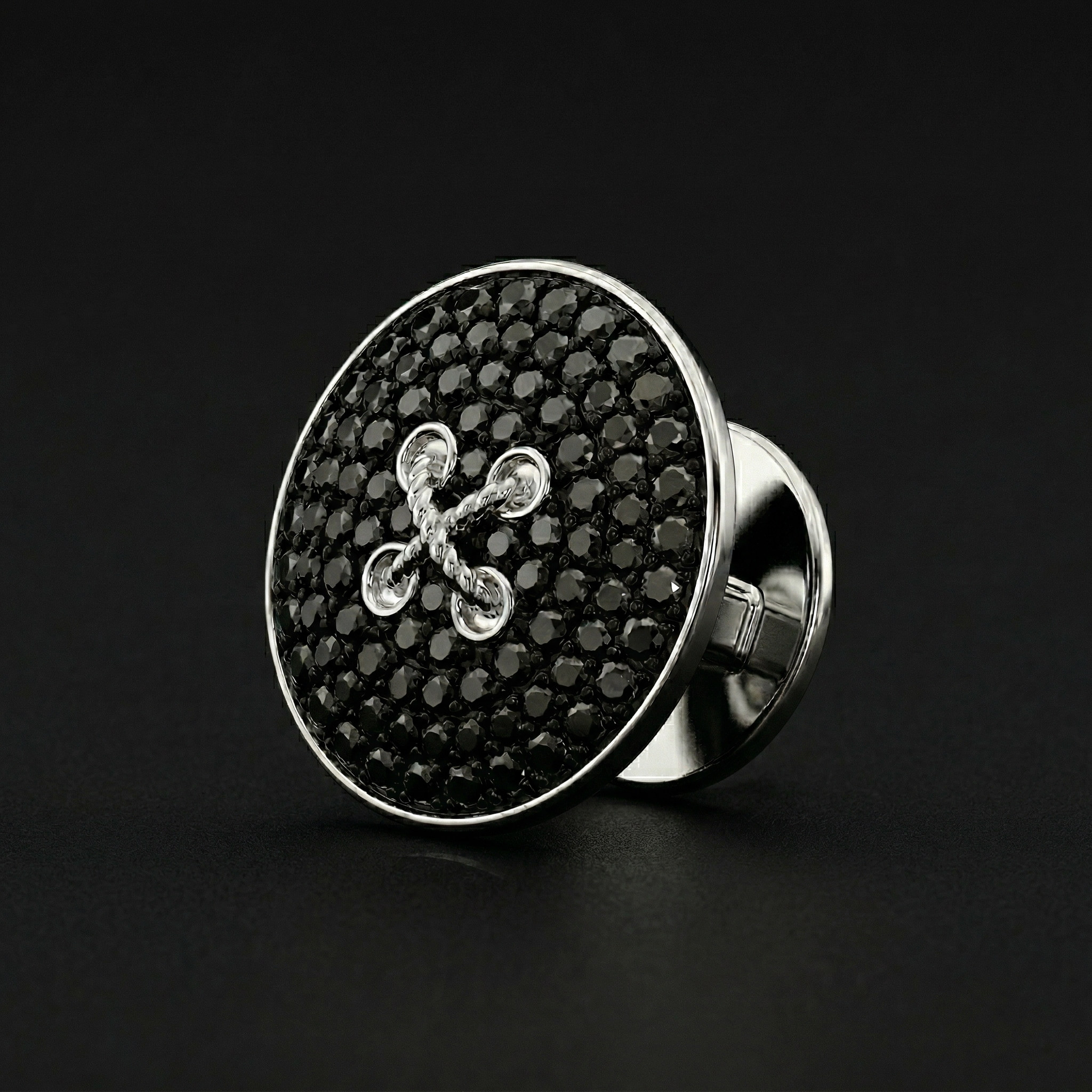
Detachable buttons and brooches are where we spend most of our time for wedding families. The Herald Buttons are 925 sterling silver with lab-grown white diamonds, from ₹45,000 at the time of writing, and the Regent Button is 925 sterling silver with natural black diamonds, from ₹55,900; both suit a brother who wants to sit beside a groom in white metal. The Insignia Lapel Pin, in 925 sterling silver with lab-grown white diamonds, is a quieter alternative to a brooch at the reception.
The practical takeaway
Find out the groom's metal tone and focal piece first. Then plan three pieces per function, almost none at the haldi, and buy only what you will wear at the next wedding. For a brooch, our brooch for men guide shows exactly where it sits on a bandhgala or sherwani.
