
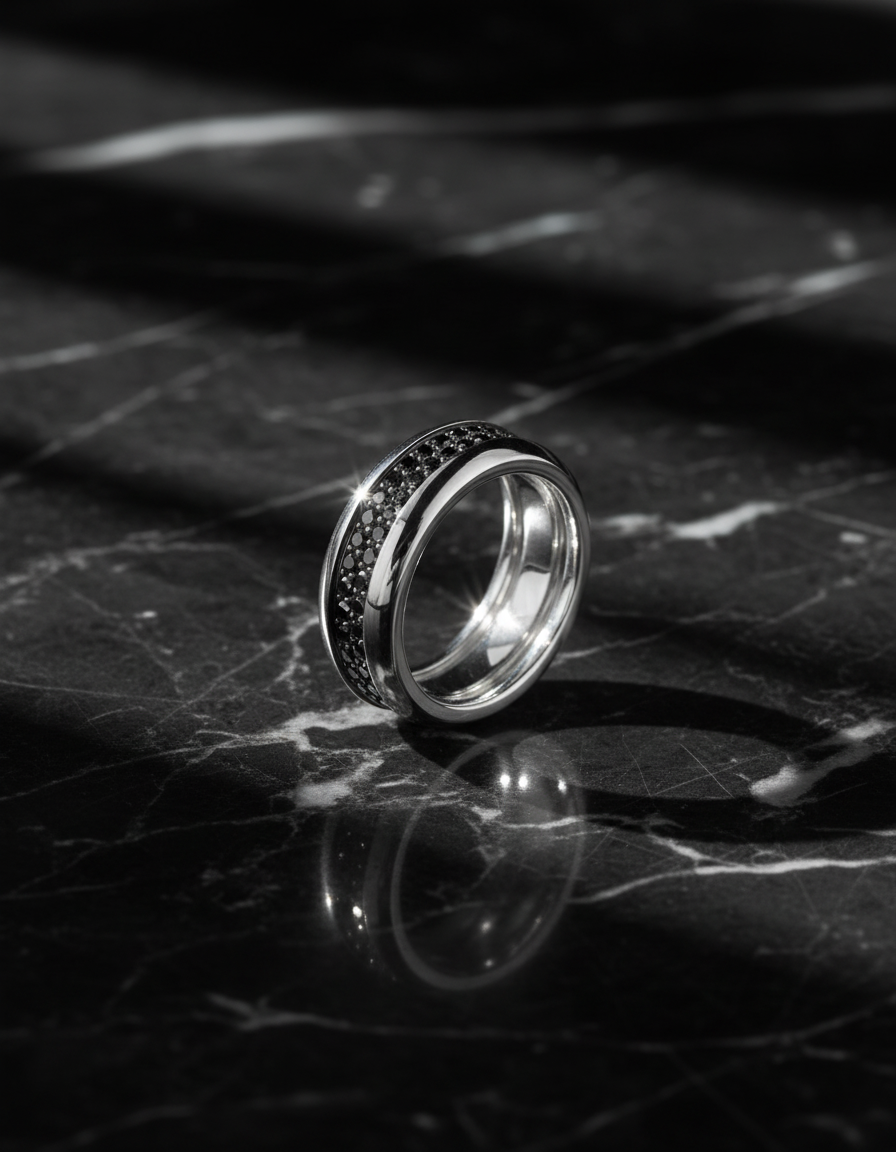
Wedding budgets in India are planned in detail for the bride's jewellery and almost not at all for the groom's. Most grooms find out what they need a few weeks before the wedding, buy in a hurry, and end up with a locker full of one-day pieces and a ring they chose in ten minutes. A little planning fixes both problems.
This guide breaks the groom's jewellery into items, explains what drives the price of each, suggests how to split a budget of any size, and compares buying, renting, reusing family pieces and commissioning. It does not quote live gold rates, which change daily; it shows you how to check a price yourself.
What jewellery does a groom actually need to budget for?
A groom typically needs four to seven pieces across the wedding functions: a ring, sherwani buttons, a brooch, a mala, a kalgi or sarpech, a kada or bracelet, and cufflinks for the reception. Not all are essential, and not all are worth owning. Our groom jewellery for sherwani checklist explains what each piece is and where it goes.
| Item | Worn again after the wedding? | What drives the price |
|---|---|---|
| Ring | Often daily, for decades | Metal weight and purity, diamond type and size |
| Kada or bracelet | Often daily | Metal weight, stones, finishing |
| Sherwani buttons | Festivals, weddings, formal events | Number of buttons, metal, stones |
| Cufflinks | With formal shirts | Metal, stones, design |
| Brooch | On bandhgalas, jackets, kurtas | Size, stone count, handwork |
| Mala | Rarely | Pearls or beads used, gold content |
| Kalgi or sarpech | Rarely | Stones, gold content, size |
The pattern is clear. The top four items earn their cost back through years of wear. The bottom two are usually worn for a few hours.
How should a groom split his jewellery budget?
Give the largest share to the ring, a fair share to the pieces he will re-wear, and the smallest share to the one-day pieces. The split below is a starting point, not a rule, and works at any total.
| Item | Suggested share of the budget | Why |
|---|---|---|
| Ring | 30 to 40% | Worn every day by many grooms; worth the best metal and stones |
| Kada or bracelet | 15 to 25% | Daily wear for many men; buy once in a durable metal |
| Buttons | 10 to 20% | Re-worn at every festival and wedding for years |
| Brooch and cufflinks | 10 to 15% | Re-worn on jackets and suits |
| Mala and kalgi | 5 to 10% | Usually rented, borrowed or bought as costume pieces |
If the bride's family is giving the ring or a kada, as many families do, move that share to the other re-wearable pieces rather than simply spending less.
What drives the price of each piece?
Every piece of fine jewellery is priced the same way: metal, stones, making charges and GST. Knowing the method matters more than knowing a number, because rates move every day.
- Metal value. Weight in grams multiplied by the day's rate for that purity. 22K gold costs more per gram than 18K, and 925 sterling silver costs a small fraction of either.
- Stone value. For white diamonds, carat weight, cut, colour and clarity set the price. Natural diamonds cost more than lab-grown diamonds of the same size and grade. Pearls and polki vary widely by quality.
- Making charges. Labour and design, charged as a percentage of metal value, a rate per gram, or a fixed amount. Hand-set pavé and detailed brooches cost more to make than a plain band.
- GST. Added on the final invoice. Ask for it to be shown separately.
Take a ring as the example. A plain gold band's price is mostly metal, so weight matters most. A diamond band's price is mostly stones and setting labour, so the metal choice matters less than the diamonds. Our guide to the engagement ring for men works through this in more detail.
Should you buy, rent, reuse family pieces or commission?
Each route suits different pieces. The table compares them honestly.
| Route | Pros | Cons | Best for |
|---|---|---|---|
| Buy ready-made | Quick, see it before you pay | May not match the sherwani exactly | Ring, cufflinks, kada |
| Rent | Low cost for a one-day look | Usually costume or kundan-style pieces, deposit required, availability in the season | Mala, kalgi, sarpech |
| Reuse family pieces | Meaning, no cost | Old clasps, loose stones and bent pins need checking; may not match | Buttons, kada, ring, brooch |
| Commission (bespoke) | Made to match the outfit and the man | Needs lead time and a clear brief | A coordinated set, or a piece to match a family heirloom |
| Buy costume jewellery | Very low cost | Plated, not re-wearable long term, can tarnish | One-day pieces only |
Renting deserves a note. Rental shops generally charge a fee and take a refundable deposit, and in the wedding season popular designs go early. Book at least a month ahead and inspect the piece when you collect it.
Family pieces are the best value of all when they fit the look. Take them to a jeweller six to eight weeks before the wedding for cleaning, a check of every stone and clasp, and any resizing.
Where to spend and where to save
Spend on anything that touches skin every day. Save on anything that touches the safa.
- Spend on the ring. It is worn most, photographed closest and kept longest. Our men's wedding band guide covers widths and comfort fit.
- Spend on the kada or bracelet if he will wear it daily.
- Spend moderately on buttons. A good set dresses every kurta and sherwani afterwards; see our sherwani buttons guide.
- Save on the mala and kalgi. Rent, borrow or buy costume versions unless the family wants an heirloom.
- Save by matching metal across pieces. One metal tone looks deliberate and avoids buying a second set for the reception.
Gold, silver or a mix?
Choose gold for the pieces he will wear daily if he prefers yellow metal, and consider sterling silver where the sherwani's embroidery is silver or tonal. A common, sensible mix is a gold ring and kada with silver or rented pieces for the rest. Whatever the metal, check that gold carries a BIS hallmark and that silver is stamped 925 before you pay.
How AXIOM approaches this
AXIOM makes the re-wearable half of a groom's jewellery: rings, kadas, bracelets, detachable buttons, lapel pins and cufflinks, mostly in 925 sterling silver with diamonds, with 18K white gold options on three pieces. The rings and bands and the wedding gifts page show what is available, and a coordinated set, or a kalgi to match his buttons, can be commissioned through our bespoke service, where there is no deposit to begin.
The practical takeaway
List every piece he needs, mark which ones he will wear again, and put most of the money there, starting with the ring. Rent or borrow the one-day pieces, get family jewellery checked early, and price every quote yourself by adding metal, stones, making charges and GST. That keeps the budget honest and the locker empty of things he will never wear again.
