
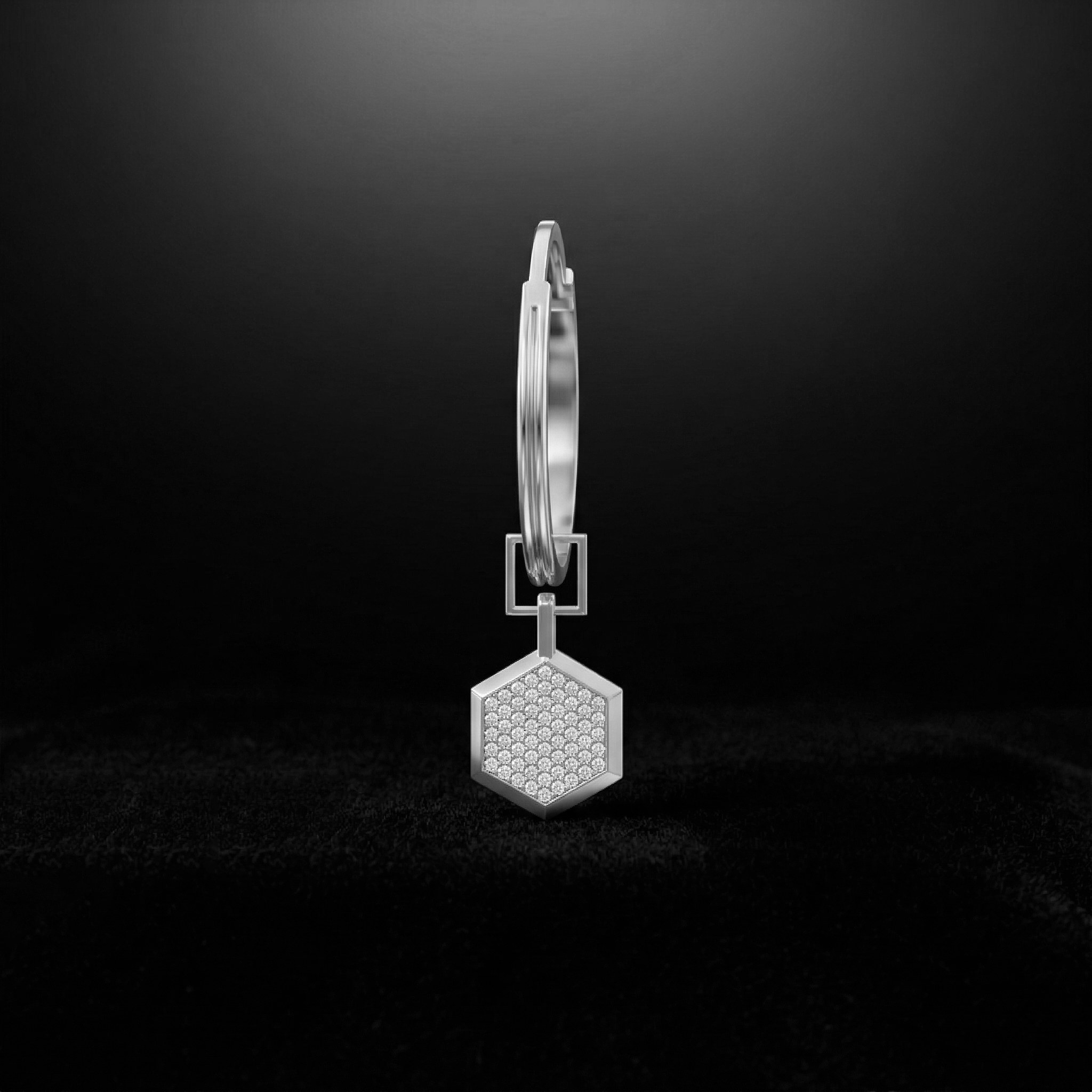
Search for a luxury keychain for men in India and the results split into two worlds: marketplace listings at a few hundred rupees with "luxury" in the title, and international fashion labels whose key rings cost as much as a phone. Almost nothing explains what you get for the money, or what separates a keychain that lasts twenty years from one that sheds its plating by Diwali. This guide does.
It is written for men buying one for themselves and for anyone choosing one as a gift. The keychain is the one accessory nearly every man carries every day, which is exactly why the materials and the hardware matter more than the logo.
What makes a keychain luxury, rather than just expensive?
Four things, in this order: solid material, secure hardware, considered weight, and finish. A brand name is a fifth, optional thing.
- Solid material. Silver, titanium, solid brass, stainless steel or full-grain leather all the way through, not a thin coat over zinc alloy.
- Secure hardware. A ring or clasp that does not open on its own in a pocket or bag.
- Considered weight. Heavy enough to feel solid in the hand, light enough not to drag on a car key or wear holes in trouser pockets.
- Finish. Edges softened so they do not catch on fabric; engraving cut deep enough to survive years of keys rubbing against it.
The pages that rank for "best luxury keychain" are product lists: designer-label key rings abroad, and marketplace listings priced in the hundreds of rupees in India. Neither kind says anything about clasps, weight or how the pieces wear, which is what decides whether a keychain is still in use in ten years.
Keychain materials compared
| Material | How it wears | Weight in the pocket | Upkeep |
|---|---|---|---|
| Plated zinc alloy | Plating rubs through where keys touch it, often within months | Medium | None possible once the plating goes |
| Stainless steel | Very durable; scratches but does not corrode | Medium | Wipe clean |
| Titanium | Very durable, does not corrode | Light | Wipe clean |
| Solid brass | Darkens to a warm patina; can mark skin and fabric green | Heavy | Polish if you want it bright |
| Full-grain leather | Softens and darkens; edges can fray if poorly finished | Light | Occasional conditioning |
| 925 sterling silver | Scratches and tarnishes slowly; polishes back, can be repaired | Medium to heavy | Silver cloth every few weeks |
| Silver or gold with diamonds | Metal as above; stones are hard but the setting must be low | Medium to heavy | Yearly check of the settings |
Keys are hard steel and brass, and they scratch anything softer that shares a ring with them. On a silver or gold keychain, that wear shows as fine scratches within weeks. A brushed or textured finish hides it; a mirror polish shows every mark.
Which hardware holds best?
The fastening is where cheap keychains fail. A split ring is the most secure way to hold keys; a clasp is the most convenient way to detach them. The best keychains use both.
| Hardware | How it works | Security | Best for |
|---|---|---|---|
| Split ring | A coiled metal ring; keys are threaded on | Very secure | Holding the keys themselves |
| Lobster clasp | A spring-loaded trigger catch | Good if solid metal | Detaching the keychain from the ring |
| Swivel clasp | A clasp on a rotating joint | Good; stops the keys twisting | Long fobs and leather loops |
| Carabiner | A loop with a spring-loaded gate | Moderate; gates can open against a belt loop | Clipping to a belt or bag |
| Detachable or quick-release ring | Two halves that pull or click apart | Varies by make | Separating car keys from house keys |
Check two things on any keychain. The split ring should be thick enough that it takes a fingernail or a tool to open; thin rings spread open over time. And the clasp's spring should be solid metal, since the spring is what fails first on cheap clasps.
Luxury keychain for car keys: mind the weight
Keep heavy keychains off a key that turns in an ignition. In the 2014 General Motors ignition switch recall, the recall record filed with the US safety regulator NHTSA told owners to remove all items from their key rings, leaving only the ignition key, because the weight on the ring could move the switch out of the run position. That was a specific faulty part, not proof that every heavy keychain harms every car, but it is a clear reason not to hang weight from a turning key.
Many newer cars use a remote fob and a push-button start, which removes the ignition question. The practical issues then become scratches and noise: a metal keychain swinging against the steering column or a centre console marks both. A detachable ring lets you leave the keychain in your pocket and hand only the fob to a valet or a driver.
Silver keychains: tarnish, scratches and care
A silver keychain will tarnish and scratch, and both are manageable. Silver reacts slowly with sulphur compounds in air and sweat, forming a dark surface film, and a trouser pocket is warm and humid. Constant rubbing keeps raised surfaces bright, so the dark film collects in recesses and engraving.
- Wipe it with a silver polishing cloth every few weeks.
- Keep it away from rubber bands and rubber-lined drawers, which speed tarnish.
- Do not soak a stone-set keychain in dip cleaners; wash it in mild soapy water and dry it.
- Have a jeweller check stone settings once a year, since keys knock against them.
For why silver darkens and how to reverse it, see our guide on whether sterling silver tarnishes.
Customised keychains for men: engraving that lasts
Engrave solid metal, not plating. Deep engraving on solid silver, brass, titanium or steel will outlast the owner; laser marking on plated metal disappears with the plating.
- Initials or a monogram on the face suit almost any man.
- A date or coordinates on the back mark a new home, a first car or a wedding.
- A short line works if the keychain is wide enough; ask how many characters fit before ordering.
Engraved pieces are usually non-returnable, so check spelling and dates twice.
Is a luxury keychain worth it?
It is worth it if he carries keys every day and does not wear jewellery. A keychain is used daily, has no size to get wrong, and sits outside dress codes, which makes it one of the easiest fine pieces to give a man; our guide to a gift for a husband who doesn't wear jewellery covers why.
It is not worth it if he loses keys often, if his home and car are mostly keyless, or if the price is mainly a label on plated metal. As a business gift it works at the senior end, and our guide to corporate gifts for men covers etiquette; for a brother, it is a natural Bhai Dooj gift.
| Price tier | What you usually get |
|---|---|
| A few hundred rupees | Plated zinc alloy, printed leatherette or novelty designs; the bulk of marketplace "luxury" listings |
| A few thousand rupees | Stainless steel, titanium, solid brass or genuine leather from good makers |
| Designer labels | Leather or metal key rings from fashion houses; you pay largely for the name |
| Fine jewellery | Solid silver or gold, sometimes set with diamonds, hand finished |
How AXIOM approaches this
AXIOM makes one keychain, the Keystone Keychain, in solid 925 sterling silver set with lab-grown white diamonds, from ₹18,600 at the time of writing. It is made to order and finished by hand at the Bharat Diamond Bourse in Mumbai, like the rest of our men's accessories, and it carries the same lifetime craftsmanship guarantee as a ring or bracelet.
The practical takeaway
Judge a keychain by its material and its hardware before its name. Choose solid metal or full-grain leather, a split ring that takes effort to open and a solid clasp, and keep heavy pieces on a detachable ring away from any key that turns. If it is silver, accept the fine scratches and wipe off the tarnish; that is what a well-used keychain looks like.
